Join us for conservation work parties at Mill Hill on the following dates:
| Month | Saturday | Thursday |
|---|---|---|
| November | 1st | 20th |
| December | 6th | 18th |
| January | 3rd | 15th |
| February | 7th | 19th |
| March | 7th | 19th |
We meet at 10:00 AM at the top car park
What3Words location: hexes.lifetimes.canine
Sessions run until 3:30 PM, but feel free to arrive and leave whenever suits you.
Everyone is welcome—no experience necessary.
To learn more, please contact Jonathan at jc@tgsi.net.
To the Victorian entomologists the famed west-facing slope that stretched from what is now the A27 Shoreham flyover to Old Erringham Farm was known as Shoreham Bank or just "The Bank". This scarp of rich chalk grassland was host to Chalk Hill Blue butterflies in their hundreds of thousands and a mecca for lepidopterists. What we know of as Mill Hill LNR is a tiny 33-acre remnant of a 724-acre tract gifted to the local council in 1934 and formally designated a Local Nature Reserve in 2005.
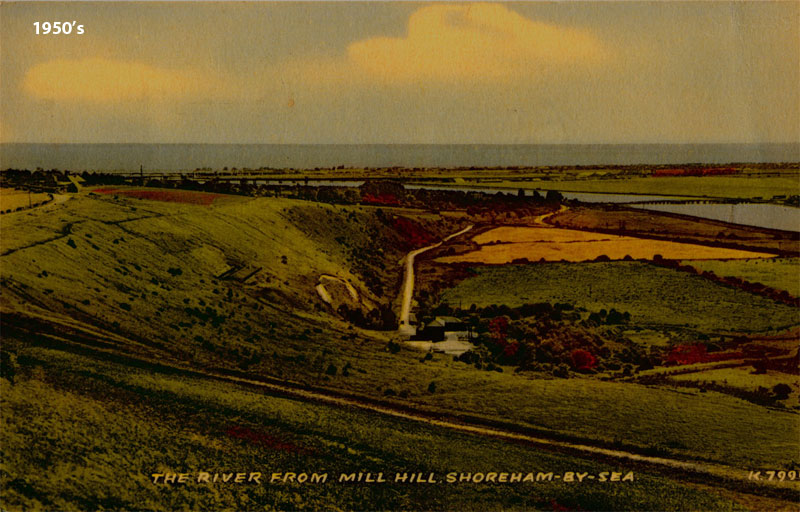
It is hard to find any recent references to Mill Hill written over the past fifty years that have not remarked upon its steady decline as a site of ecological interest due to the accelerating loss of chalk grassland. Post war farming practices, myxomatosis, climate change, rabbit hemorrhagic disease (RHD) and invasive plants have all played their part, despite the efforts of the various volunteer groups that have come and gone over the past fifty years.
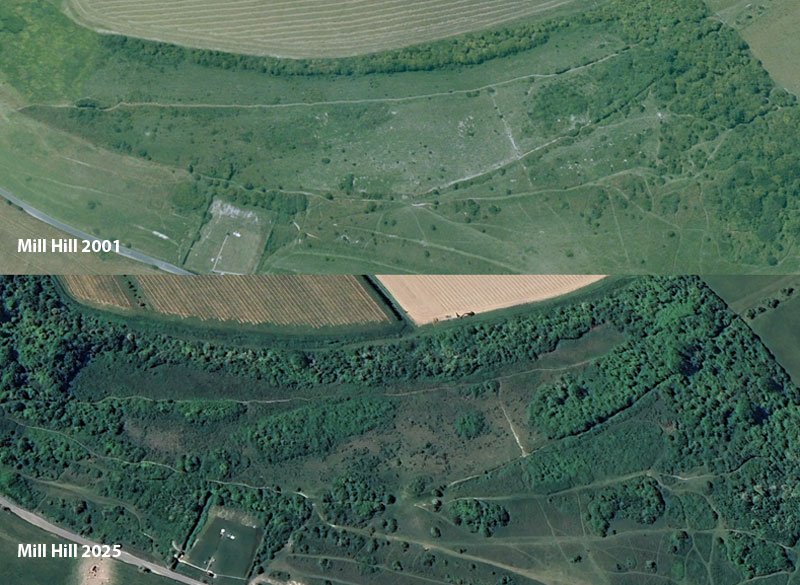
Adur and Worthing Council website highlights the rarity and importance of the unimproved chalk grassland on Mill Hill, but under their stewardship only a fraction of this precious landscape remains. Each year more grassland becomes scrub and more-established scrub becomes woodland. The latest Ordnance Survey Landranger maps now classify the lower slopes of Mill Hill as non-coniferous woodland.
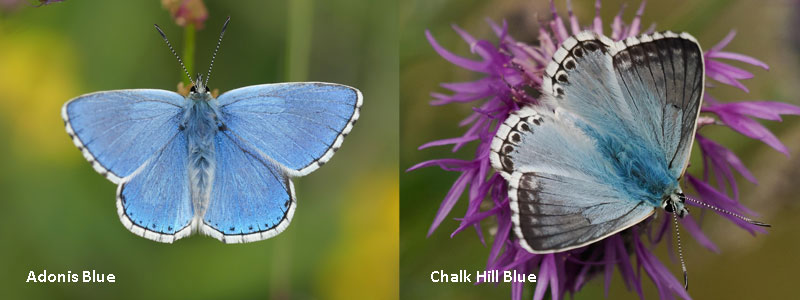
In 2024 only 47 Chalk Hill Blue Butterflies were recorded on the Butterfly Conservation transect. Adonis Blue Butterfly numbers have collapsed too. In 2017 there were 120 posts from Mill Hill on the Butterfly Conservation Sussex Branch website, but in 2024 there were just 19, and many of these commented on the poor state of the site.
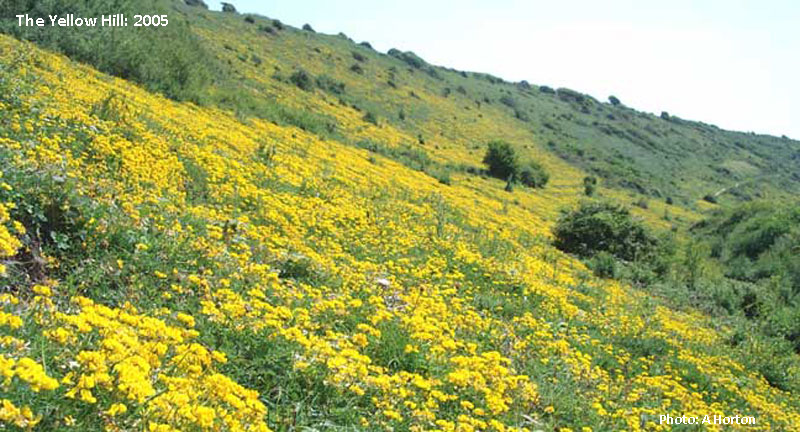
The caterpillar food plant of both the Adonis Blue and Chalk Hill Blue butterflies is Horseshoe Vetch. The butterflies need the vetch to grow in short grass so that the ants with which they have a complex symbiotic relationship with can survive. This year the Horseshoe Vetch failed to bloom in great numbers, and perhaps for the first time Mill Hill did not turn a vibrant yellow in May, a sight that has enriched the journey along the A283 for generations.
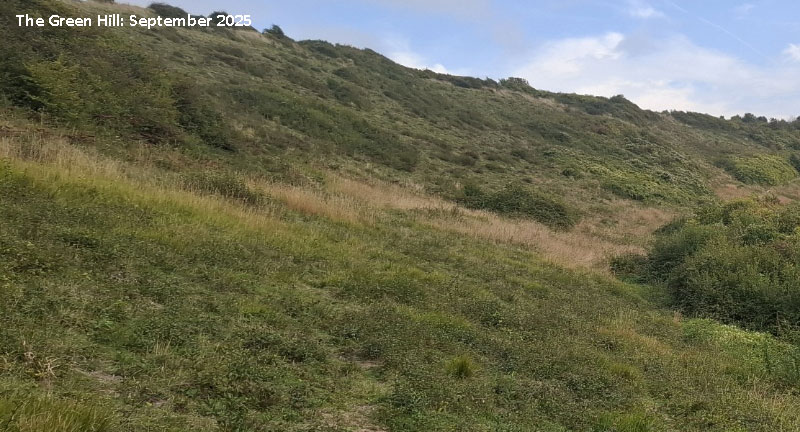
There are two immediate reasons for this failure. One happened in slow motion over twenty-five years: the steady creep of Wild Privet down the hill, each year eating up a few more metres of precious chalk grassland. The other happened with extraordinary swiftness: the spread of the invasive mediterranean ground covering plant Cotoneaster, a popular garden plant which seems to thrive in our warming climate. Both plants are poisonous and even the slow return of the rabbits will do nothing to impede their relentless advance.
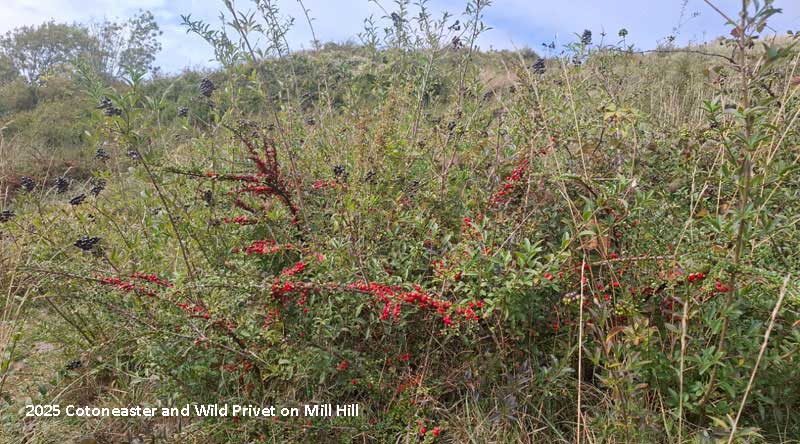
If we do not remove the Cotoneaster and reverse the advance of the wild privet, the chalk downland that is defining character of Mill Hill will be lost forever and with it all the flora and fauna that makes chalk grassland one of the richest habitats in the world.
If you would like to take part or know more, please contact me at jc@tgsi.net.
Jonathan Crawford