Aglais io
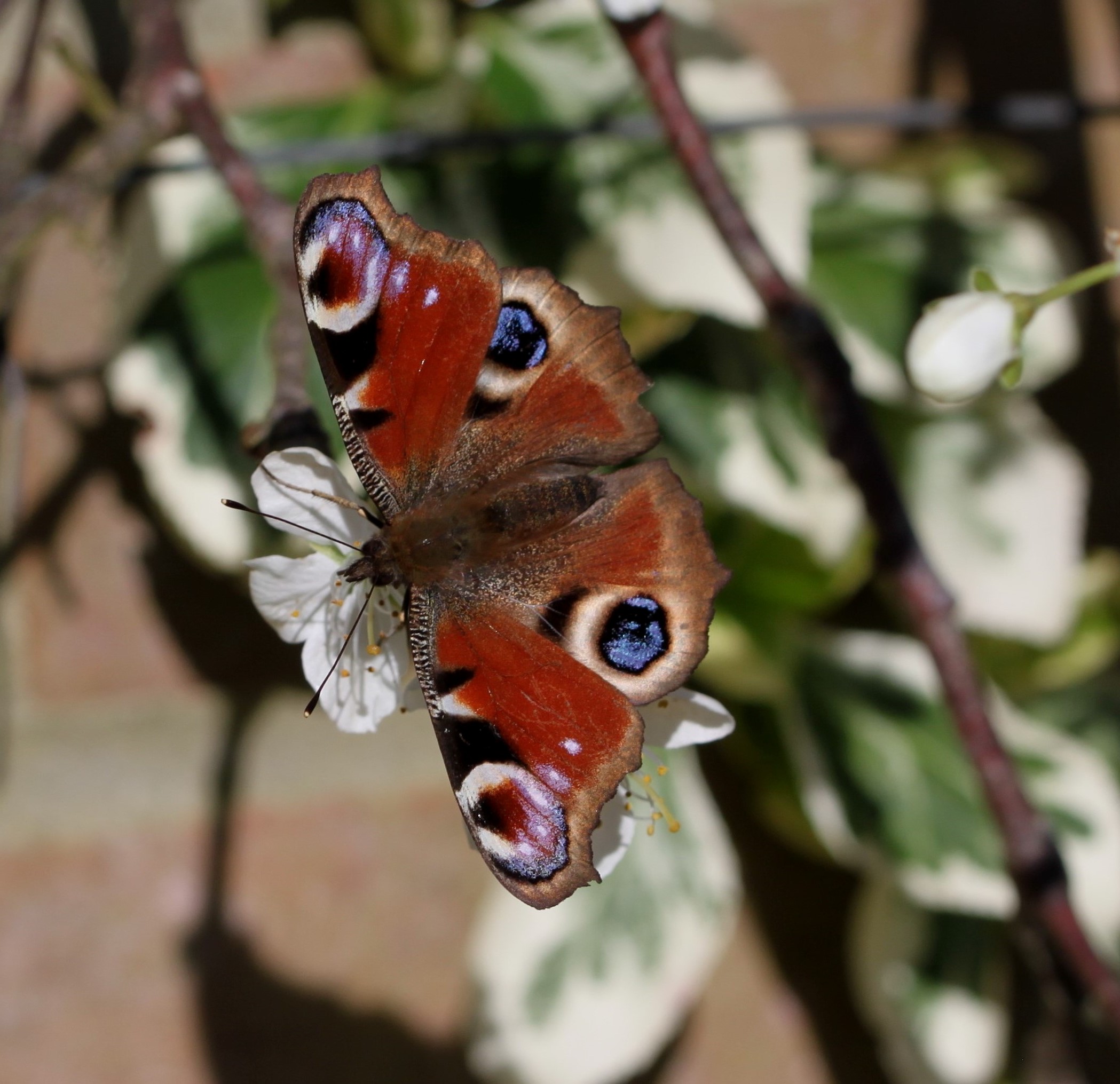
With a huge eyespot on all four wings, a Peacock is one of our best-known and easily-identified butterflies. In Sussex, it has been recorded in every week of the calendar year.
The occasional individual emerges very early from its deep winter sleep, and an analysis of the website records between 2006-2024 provides us with an “average first sighting” of January 14th. However, these mid-winter records are relatively uncommon, and most of us will not see a Peacock before the second half of March, or more likely April, when the main emergence occurs. In early spring there isn’t a great deal of nectar available, but Goat Willow and some fruit trees blossom early enough to provide the sustenance required for its survival.
Males typically feed in the mornings and then set up territories in the afternoon. They usually position themselves on a sun-bathed track or path, at the edge of a wood or hedgerow. Where this species is abundant, the territorial males may be spaced as little as 10-15 metres apart.
Historically, Peacocks were considered to be single-brooded, although an occasional second brood was recognised. With global warming and climate change there has been a dramatic shift over the past 30 years, and since 2015, second brood individuals have been recorded annually. This change in behaviour hinges on the ever-earlier emergence of the summer brood. In the early-1990s the summer brood emerged in late July/early August but in the survey years of 2010-2014 it was a week earlier, from mid-July, onwards. Since 2015 records for the first week in July have occurred regularly e.g. 16 seen at Lancing Ring on 03/07/2018, and very fresh specimens seen in a Storrington garden on 06/07/2020 and 06/07/2023.
A very early summer brood means there is plenty of time for the successful completion of a second brood, an example of which is shown in the image gallery below (this very fresh individual was photographed on 09/10/2021). A regular second brood means that we are recording Peacocks later-and-later in the year. Between 2010-2014, the average last sighting date was November 23rd, but in the decade since, the average last sighting date was December 12th. Climate change is having a profound effect on many of our butterfly species.
Widespread and generally abundant, they can be found in any sunny, woodland ride, but the easiest location to observe and photograph Peacocks in late summer, is often in your own garden, where they find the nectar of Buddleia quite irresistible. In the wider countryside look for them on a variety of wildflowers including Hemp Agrimony, Field Scabious, and various thistles.
Peacock nectaring on Plum blossom – photo by Martin Kalaher
.JPG)
Early emergence of the summer brood, 06/07/2020
.JPG)
Nectaring on Hemp Agrimony
.JPG)
Nectaring on Michaelmas Daisy
.JPG)
Second brood, 09/10/2021
.JPG)
Peacock caterpillars munching on Hop leaves
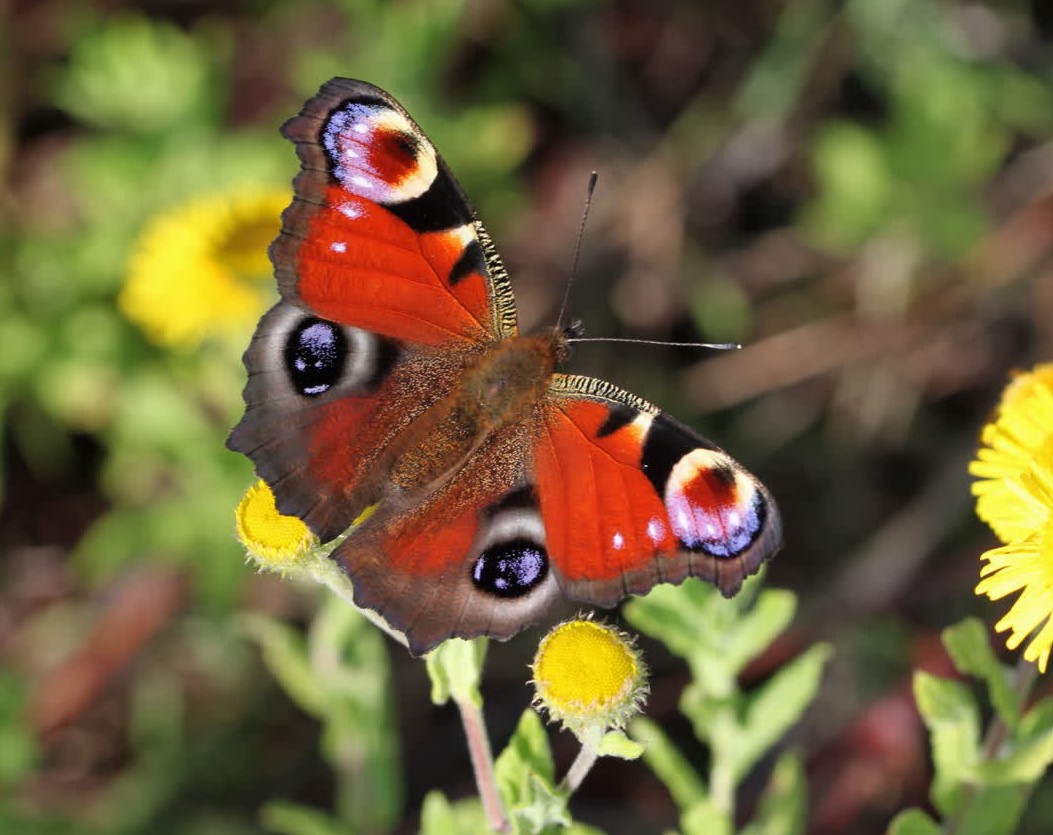
A second brood individual, 06/09/2025
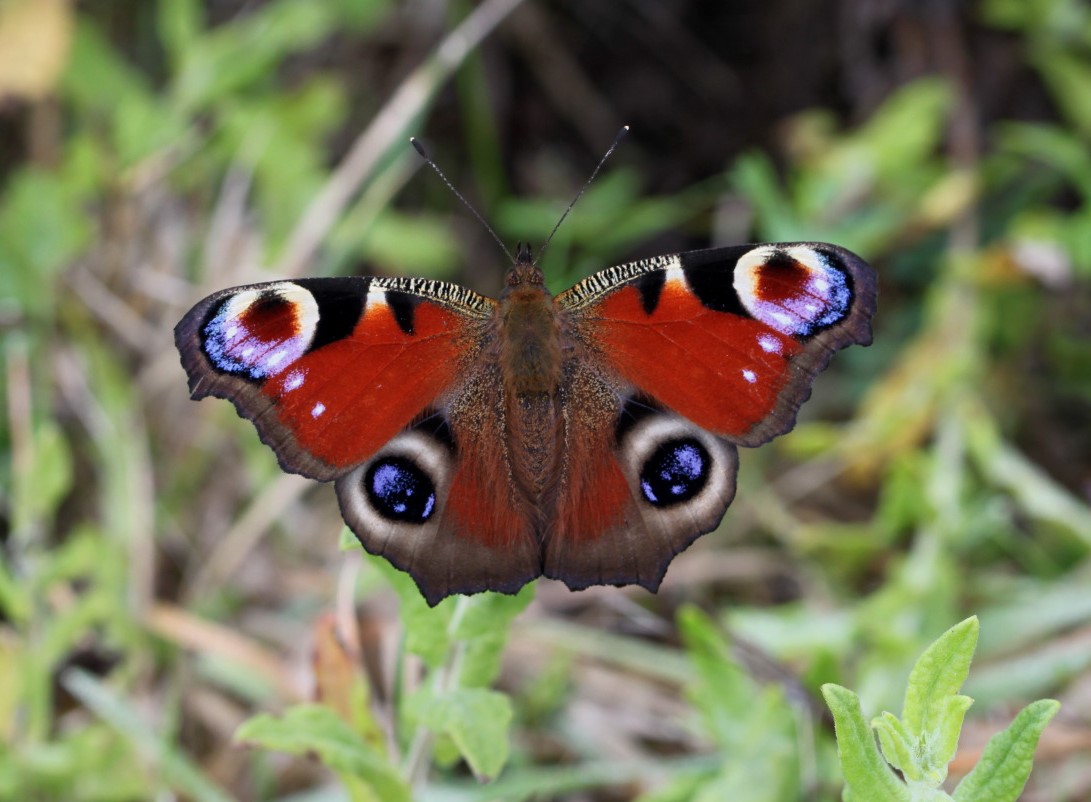
A second brood individual, 08/09/2025
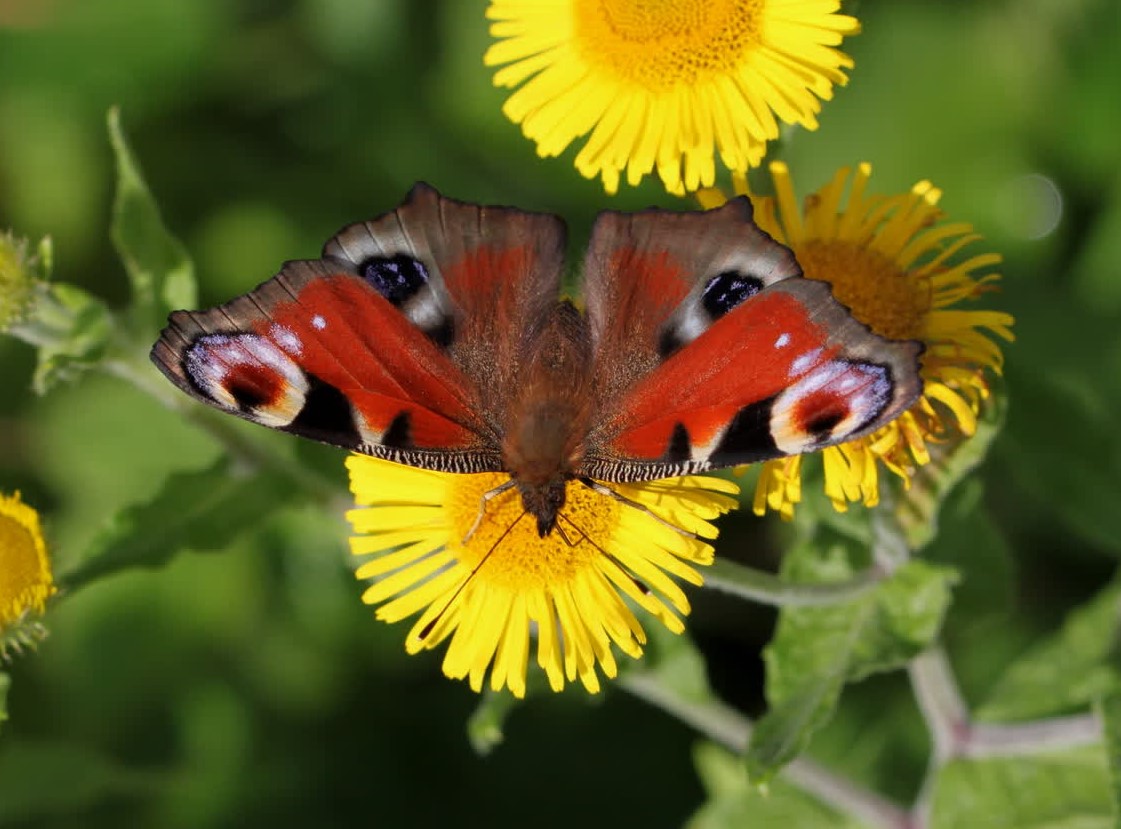
A second brood individual, 10/09/2025
Butterfly Conservation Peacock