,StanstedForest10523-15052023-2Neil_Hulme4129.jpg)
Boloria euphrosyne
This beautiful fritillary was once widespread and abundant, but its strong preference for very small violets has been its “Achilles Heel”. A succession of young violets requires rotational coppicing (or clear felling) and once that stops, both the violets and the fritillaries will go into freefall. The lack of demand for wood products and the switch to conifer plantations after the Second World War led to a dramatic decline in this species fortunes. In the 1990-1994 county survey it was only found in 62 tetrads and in the 2010-2014 survey there was a further reduction, with sightings in just 20 tetrads.
It is a medium-size fritillary with blocks of black spots distributed over its orange-brown uppersides. With closed wings, the hind wing markings are very distinctive, with seven silver-white pearls on the outer edge, and two bright patches of silver situated on either side of a central pentagonal cell, which contains a small black dot. A Small Pearl-bordered Fritillary also has seven silvery white pearls on the outer border of the hindwing, but it has seven or eight patches of silver surrounding the "pentagonal cell", which contains a considerably larger black dot.
Between 2006-2024 the “average first sighting” was April 23rd (range, April 15th to May 6th). This species has a fairly short flight period of 5-6 weeks, with an “average last sighting” of May 27th (range, May 18th to June 11th). A second brood is a very rare occurrence and in this millenium there has been just one record, a single in Abbot’s Wood on 29/09/2020.
The astonishing decline of this species was halted by a sustained effort, by many parties, over a period of twenty years, or so. Pearl-bordered Fritillaries were re-introduced to Abbot’s Wood in 2004 and then in 2015 an initiative called “Fritillaries for the future” was launched by Butterfly Conservation, with Neil Hulme playing a leading role. Pearl-bordered Fritillaries were re-introduced to Stansted Forest, and a programme of rotational coppicing was initiated at Rewell Wood. Many organisations have been involved in preventing the local extinction of this species, and they include Butterfly Conservation, Forestry England, the Norfolk Estate, and the South Downs National Park Authority. Congratulations to all of them and apologies to any organisation or landowner that is missing from the list!
In Sussex, the larval foodplant is the Common Dog-violet. There is a strong preference for small, young violets that typically grow in the 12-24 months that follow coppicing. Otherwise, any sunny woodland glade or ride where small violets emerge through a warm layer of dry leaf litter or dead bracken.
In West Sussex, the most reliable site is Rewell Wood on the track between SU984077 to SU980079. There is also a colony at Stansted Forest at SU747105. In East Sussex, they can be found in Abbot's Wood at TQ561081 and TQ569082, and Rowland Wood at TQ515147.
Map references are for guidance only, as PBFs will move around their woodland to locate young violets, and the precise locations are likely to vary from one year to the next.
Mating pair of Pearl-bordered Fritillaries – photo by Neil Hulme
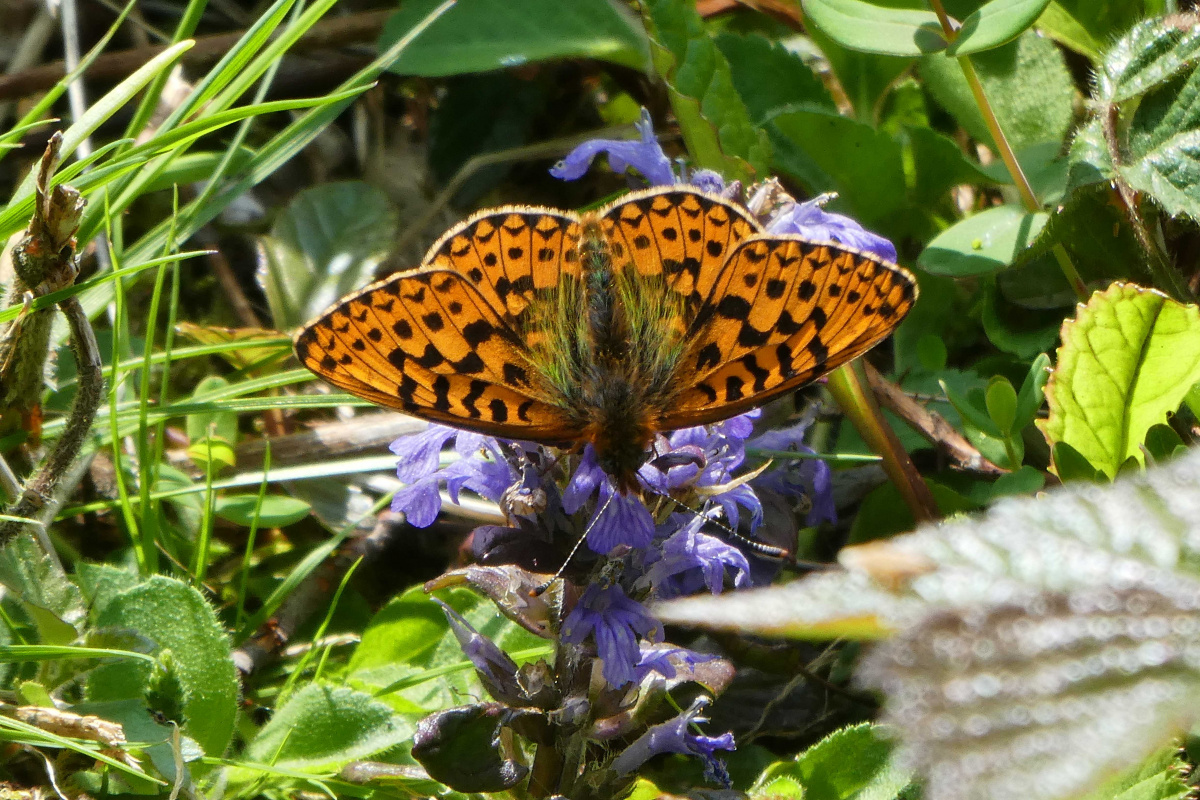
Male nectaring on Bugle – photo by Peter Farrant
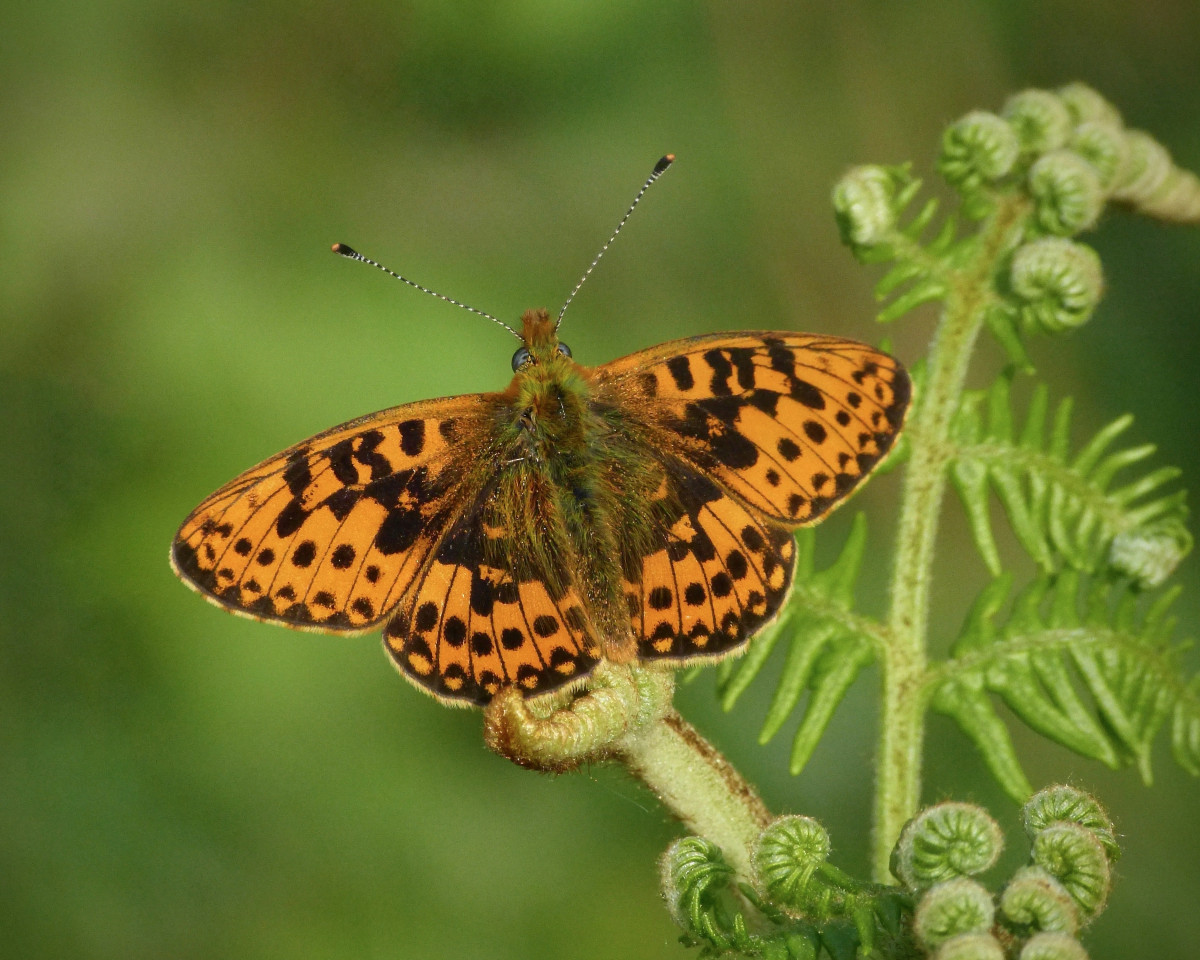
Male perched on Bracken – photo by John Williams
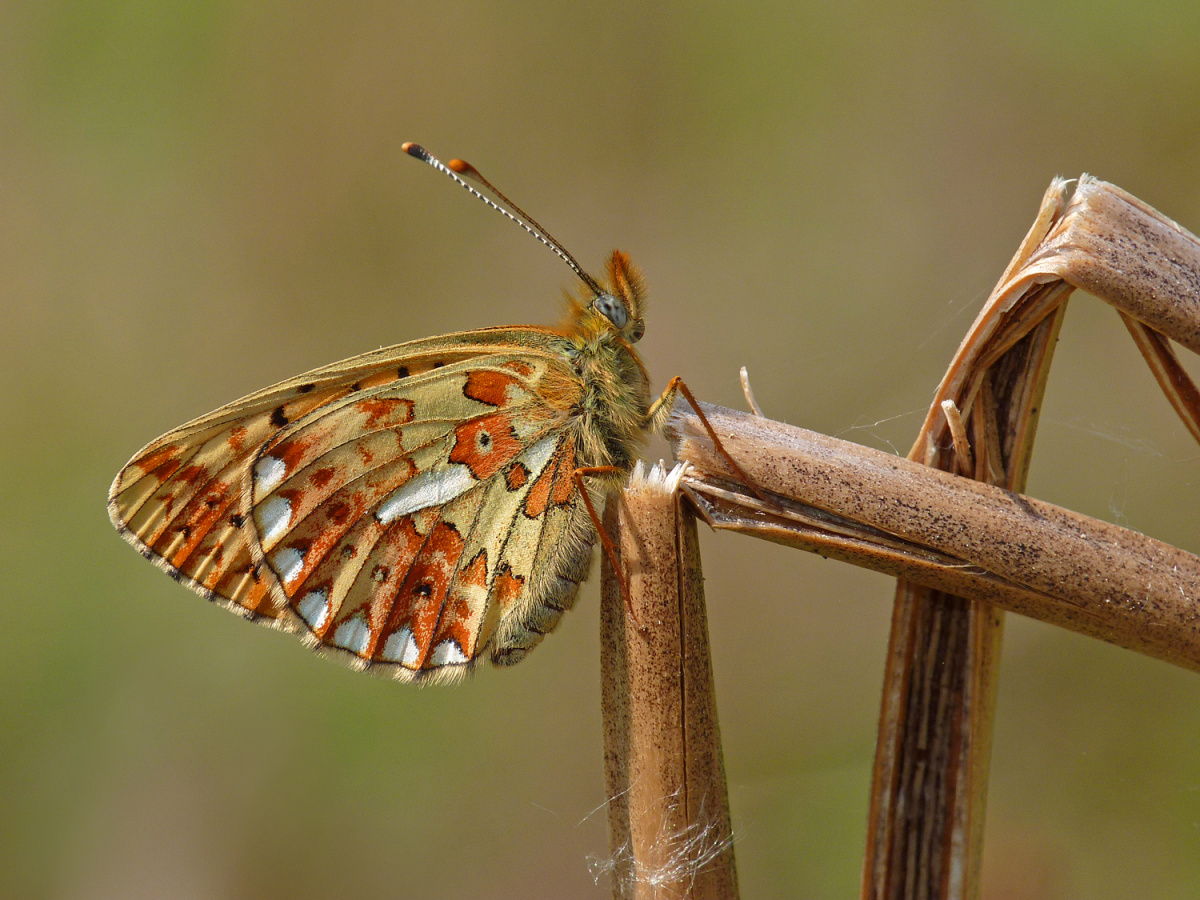
Female at roost – photo by Neil Hulme
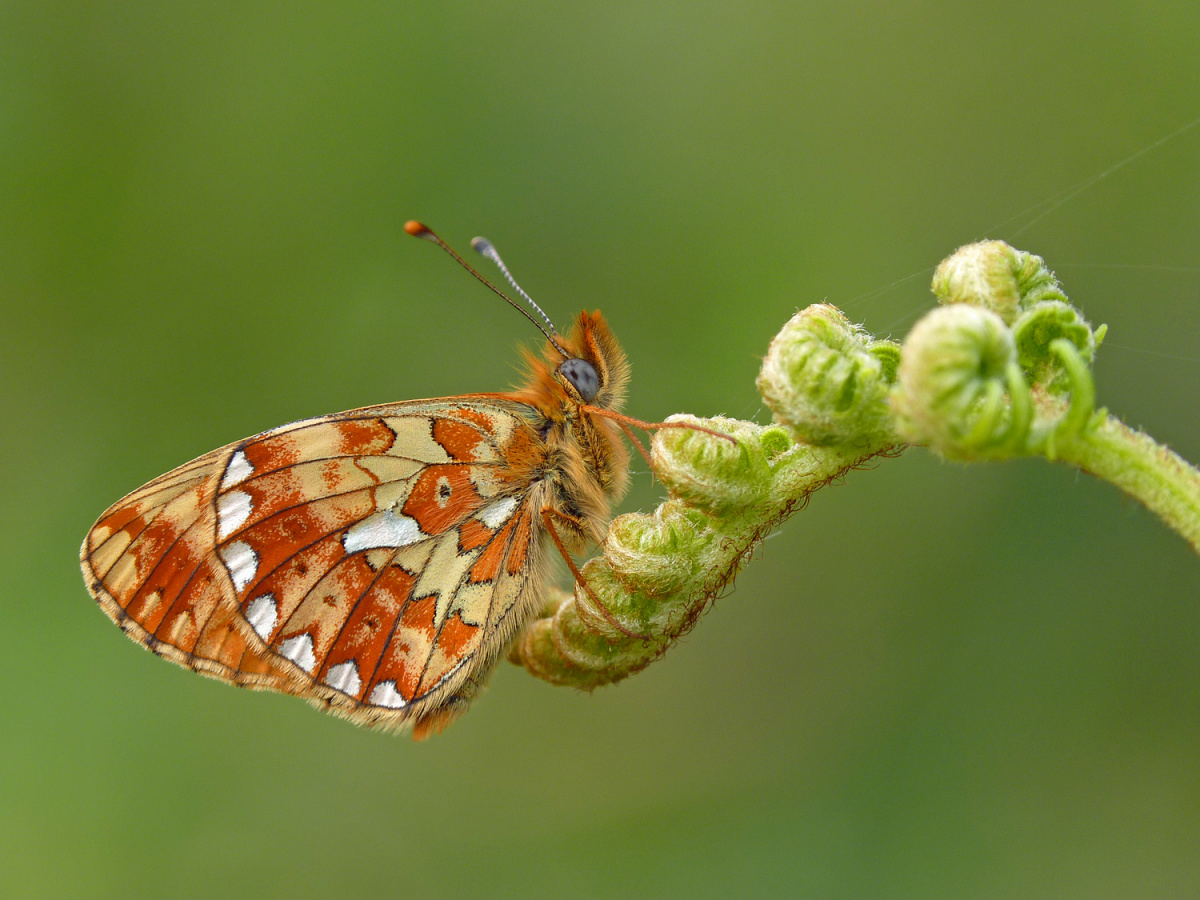
Male at roost – photo by Neil Hulme
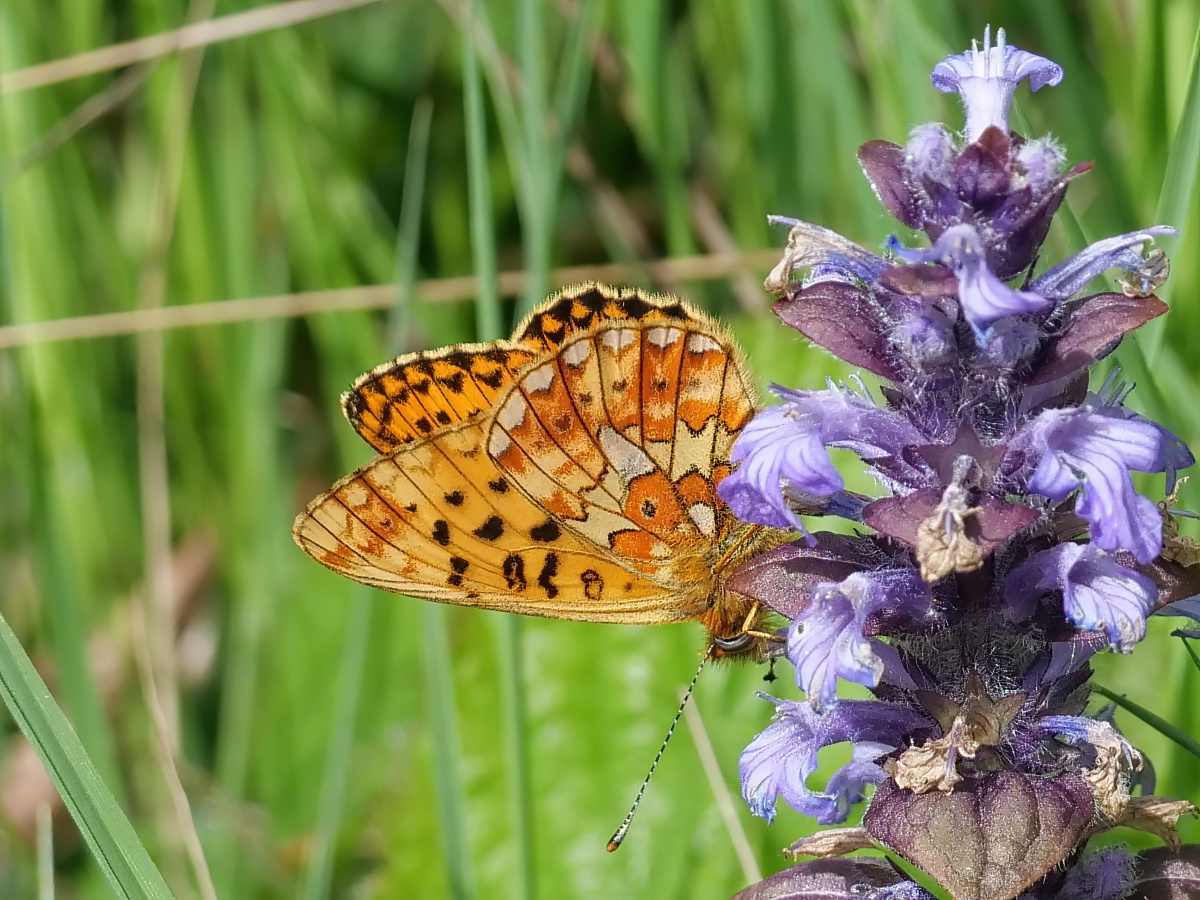
Nectaring on Bugle – photo by Nicholas Turner
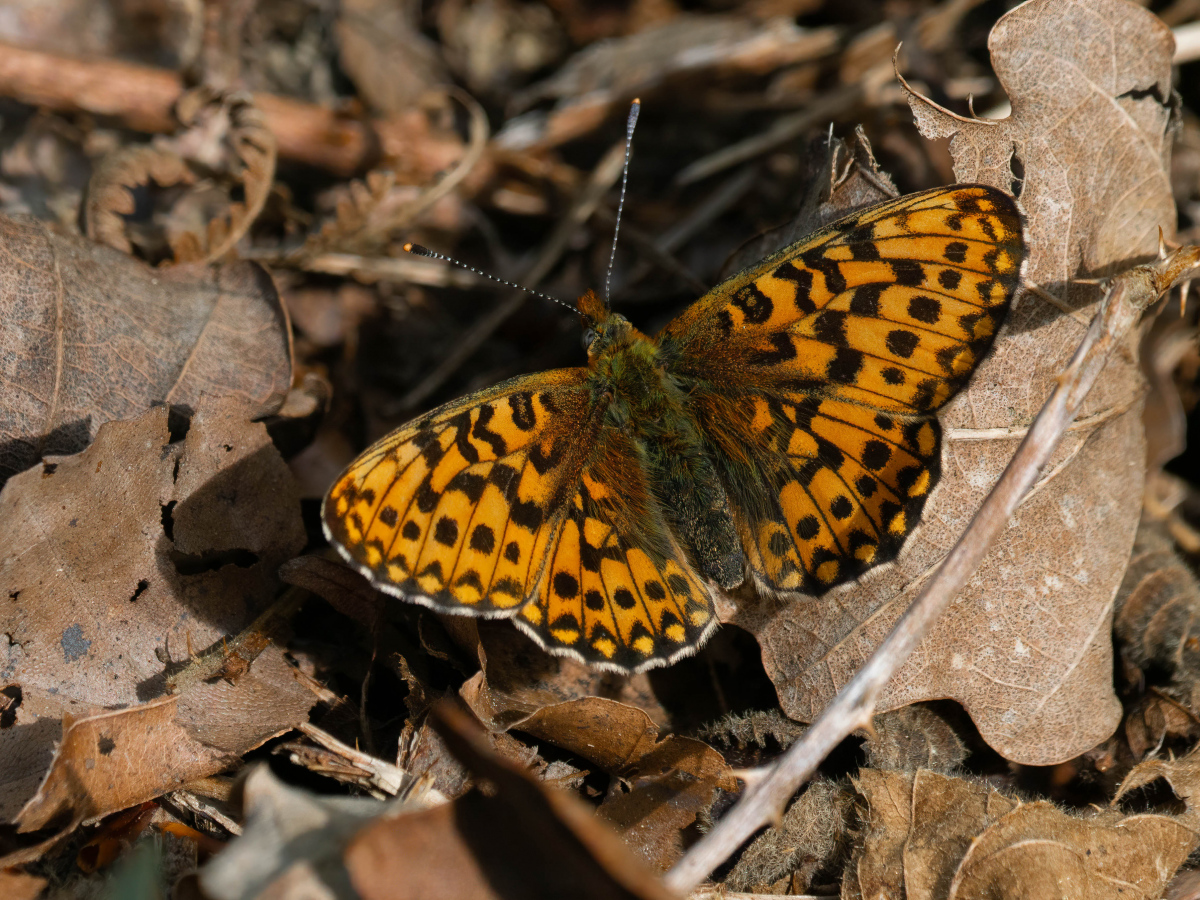
Resting male, on leaf litter - photo by Graham Hubbard
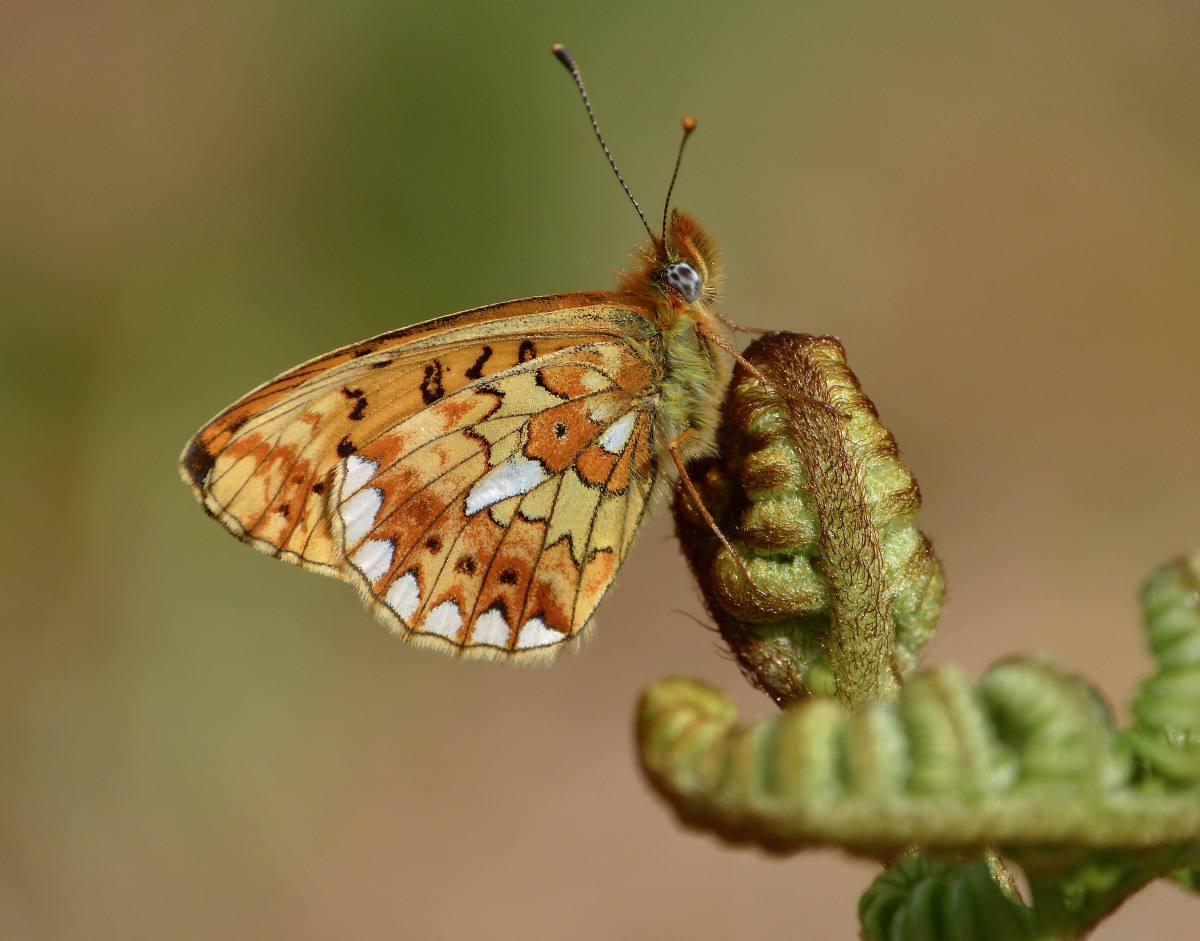
Roosting - photo by John Williams
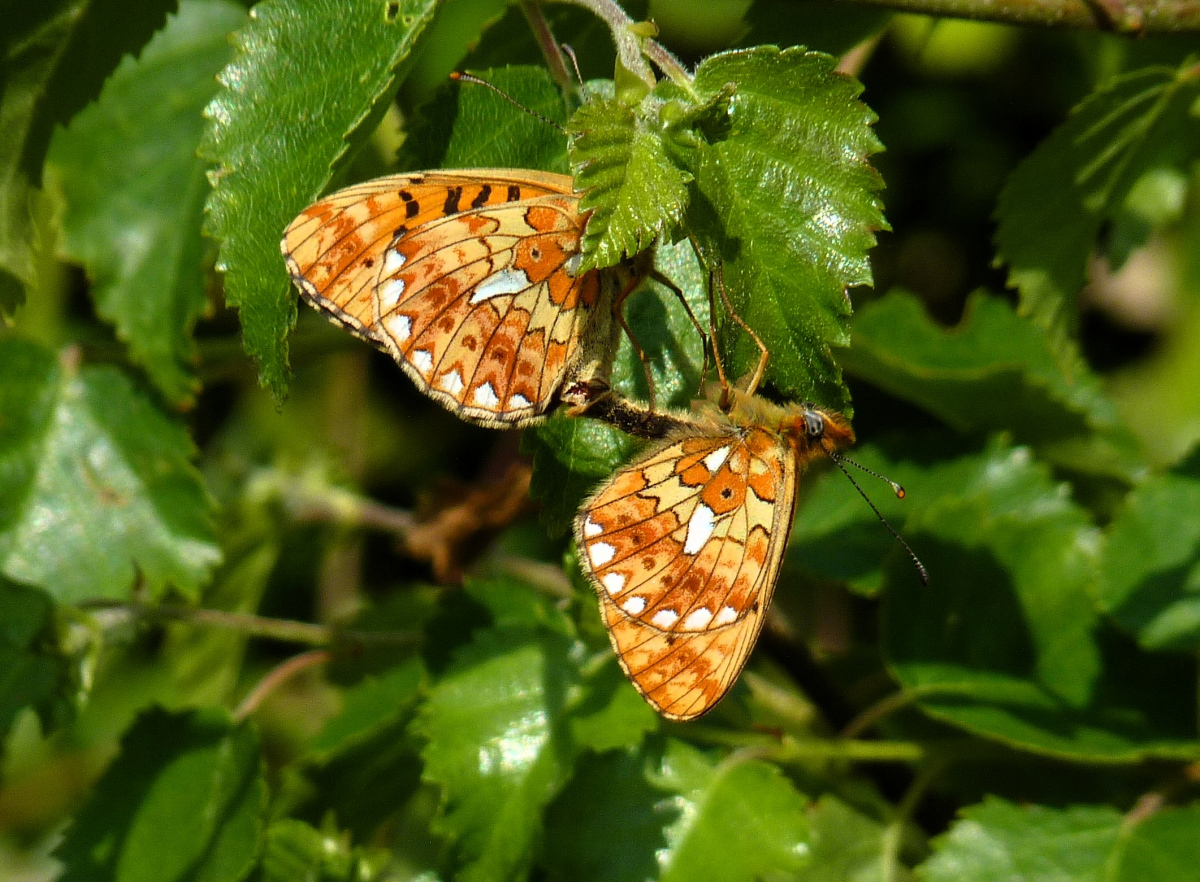
Mating pair - photo by Trevor Rapley
Butterfly Conservation Pearl-bordered Fritillary