Vanessa atalanta
This stunning black-and-scarlet butterfly is one of our best-known species and identification should be straightforward. In late summer/early autumn, it can sometimes be seen in very large numbers, but for most of the year we are more likely to record this species in just ones-and-twos.
In the early 1990s, sightings occurred between late-March and mid-November but since the survey years of 2010-2014 there has been a remarkable extension to its season. An analysis of the website records between 2006-2024 has brought forward the “average first sighting date” to January 3rd and delayed the “average last sighting date” to December 29th. Climate change has had a profound impact on this beautiful insect.
Thanks to the pioneering work of Dave Harris and Vince Massimo, we can say with confidence that Red Admirals may attempt a breeding cycle all-year-round, including the depth of winter. In recent years we have seen egg-laying in late December, a mating pair in January, and in a few warm, protected areas, tiny caterpillars braving the cold of January. Amazing adaptations to a changing world.
Some over-wintering adults do survive until the spring, but the majority of Red Admirals seen in April and May are likely to be fresh migrants from mainland Europe. The strength of this spring migration is so variable that no two years are the same. With a combination of home-breeding and fresh immigration, peak numbers are seen between late July and September and then we may see large numbers feeding on a variety of plants such as Buddleia and Hemp Agrimony. In the autumn they are especially attracted to the flowers of Ivy and also to the fallen fruit found in gardens and orchards.
Anywhere and everywhere, in Sussex. To attract them to your garden, consider planting Buddleia and Hemp Agrimony. The flowerheads of Common Ivy provide much-needed nectar for migrating Red Admirals (and also hoverflies and solitary bees), so please do not cut back your garden Ivy until November, at the earliest!
Red Admiral nectaring on Variegated Ivy – photo by Martin Kalaher
.JPG)
Nectaring on Hemp Agrimony
.JPG)
Nectaring on Buddleia
.JPG)
Nectaring on Michaelmas Daisy
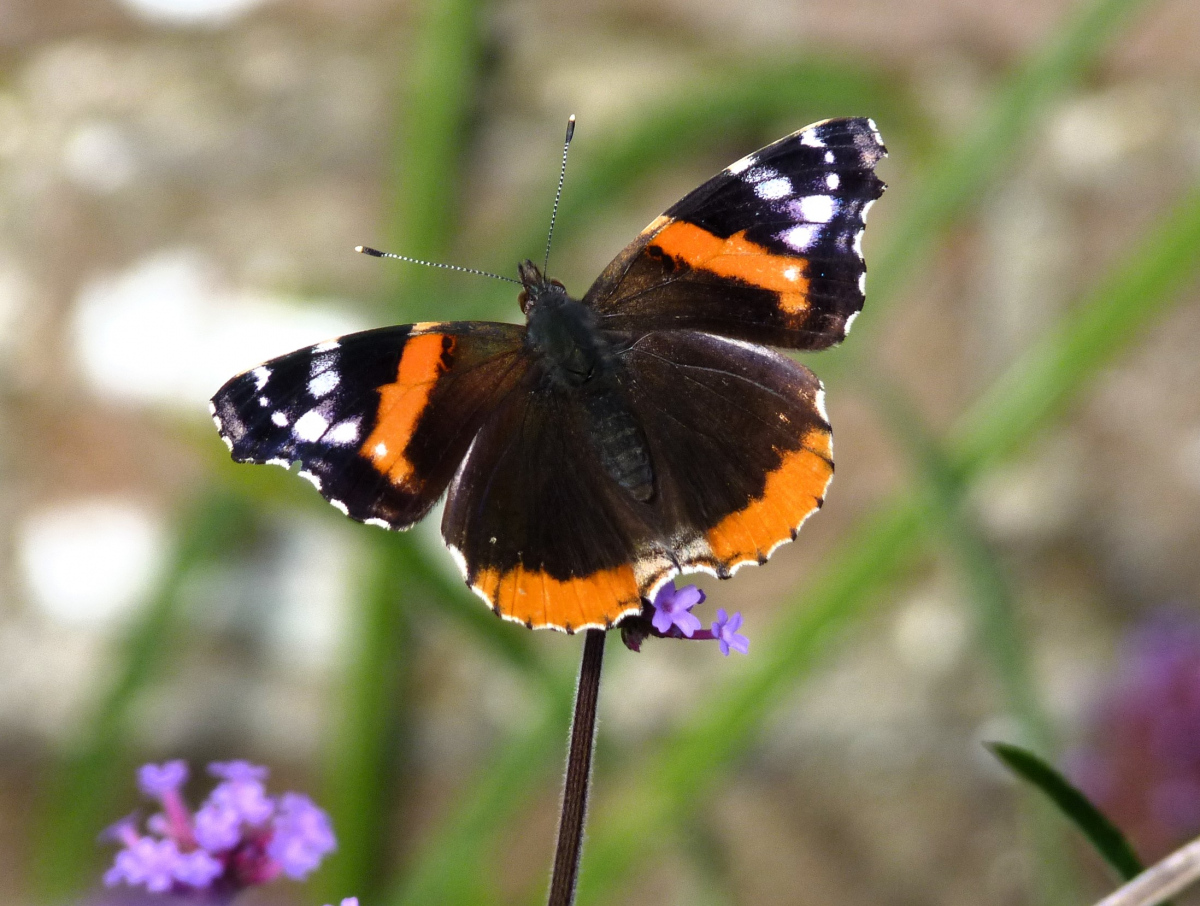
Red Admiral aberrant - photo by Trevor Rapley
.JPG)
Closed wings, nectaring on Variegated Ivy
Butterfly Conservation Red Admiral