.JPG)
Gonepteryx rhamni
This species is thinly-distributed throughout most of Sussex but in some areas it can be common or very common. It is single-brooded, with the adults usually emerging from mid-July onwards. Hibernation takes place quite early, in late October, but a few will remain on the wing for several weeks longer, and the “average last sighting” for the records between 2006-2024 was November 18th (range October 12th to December 9th). In Sussex, Brimstones have been recorded in every week of the year.
It is usually stated that male Brimstones begin to leave their state of hibernation in early February, and for the years 2006-2024 the “average first sighting” was February 5th. However, nothing stays the same, and if we look at the figures for 2015-2024 the “average first sighting” was January 11th. In recent years the winters have been mild and butterfly activity has begun that much earlier. April remains the month of peak activity.
To understand this species better we must look at the distribution of its two larval foodplants, Purging Buckthorn and Alder Buckthorn. Referring to The Flora of Sussex, 2018, Purging Buckthorn is associated with “chalky wood margins, hedges and scrub” and is common on West Sussex downland, but is scarce on the less-wooded downland of East Sussex (although locally common in areas such as Eastbourne/Polegate). By contrast, Alder Buckthorn is mostly found in the northern half of Sussex and favours “damp heath, heathy woodland and scrub, on damp acid soils”. Where Buckthorn is common it is likely that Brimstones will also be common.
This species is ubiquitous but one location that is worth an early spring visit, is the North Stoke amphitheatre at TQ035106. At this time of the year the footpath can be very wet, and so wellingtons may be necessary. A morning visit is strongly advised at this site, as this species has a habit of dispersing into the surrounding countryside in the afternoon, and the 20-30 that may be present in the morning may be reduced to just 2-3 individuals, later in the day.
Female Brimstone nectaring on Everlasting Pea – photo by Martin Kalaher
.JPG)
Male nectaring on Verbena Bonariensis
.JPG)
Female nectaring on Michaelmas Daisy
.JPG)
Male nectaring on Everlasting Pea
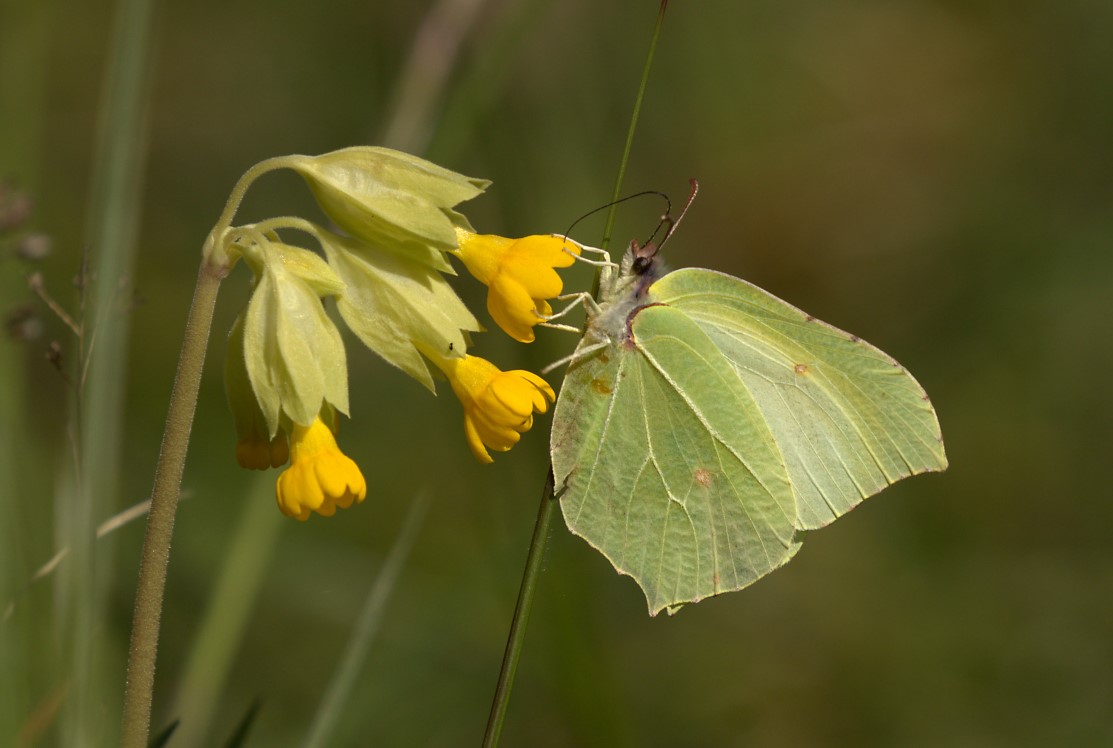
Nectaring on Cowslip - photo by Sherie New
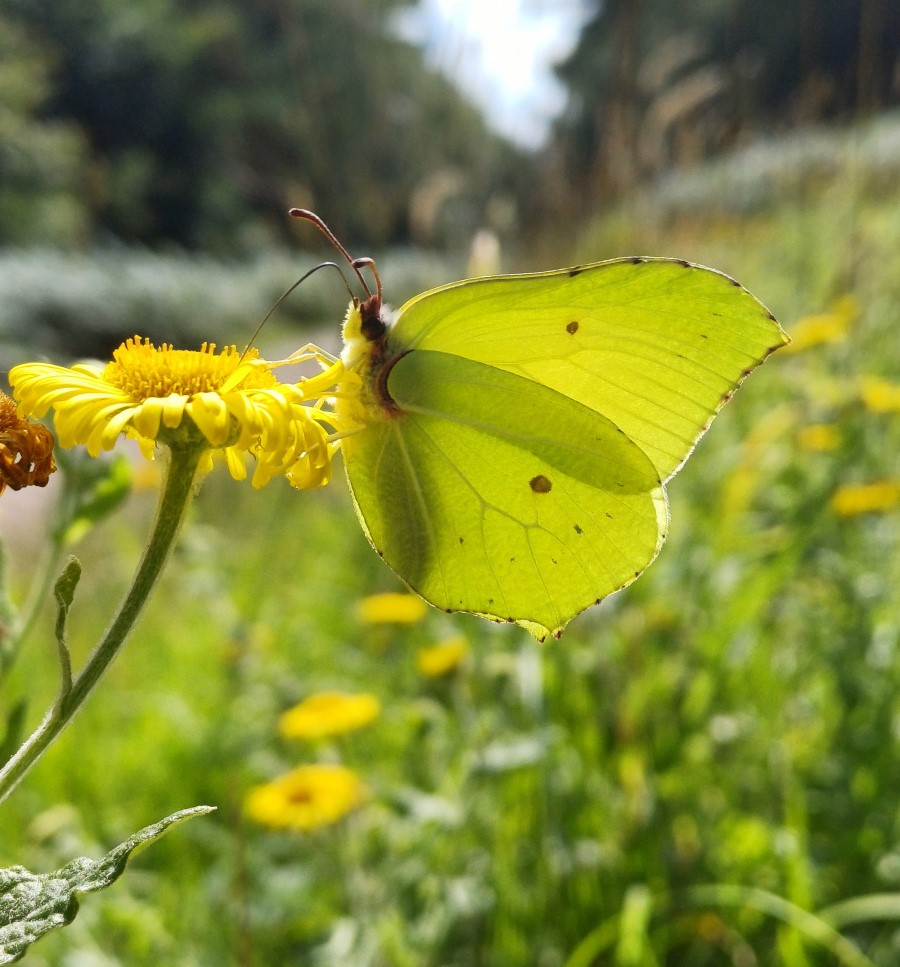
Nectaring on Common Fleabane - photo by Patrick Moore
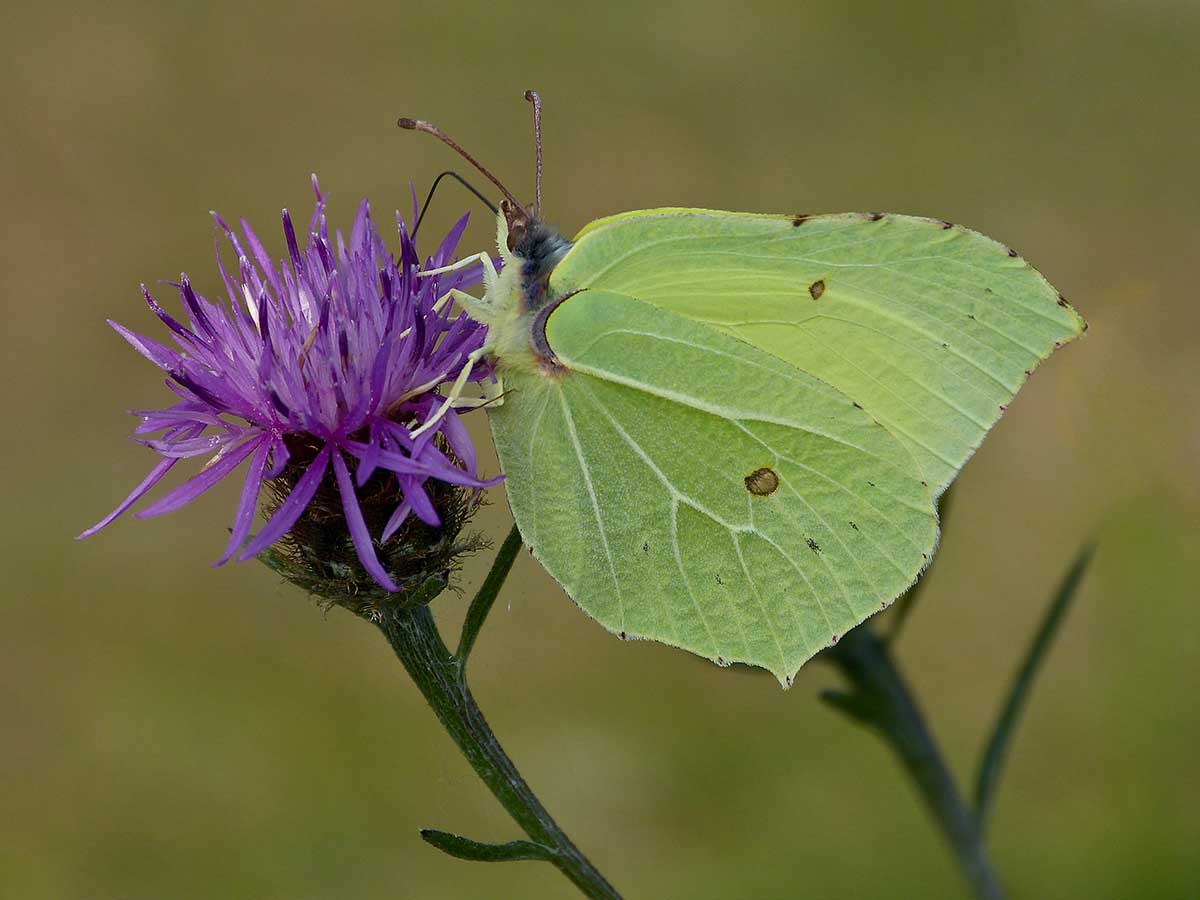
Nectaring on Knapweed - photo by John Williams
.JPG)
Egg-laying on Alder Buckthorn
.JPG)
Caterpillar mimicking the leaf of Cleavers
Butterfly Conservation Brimstone