Boloria selene
For today’s butterfly enthusiasts it is hard to believe that Small Pearl-bordered Fritillaries were once common butterflies in Sussex. Colin Pratt in his “History of the Butterflies and Moths of Sussex” reminds us that for the 100 years or more leading up to the mid-1970s some 150 colonies had been discovered. As recently as the 1990-1994 county survey this species was found in 24 tetrads. So, why did this species undergo such a cataclysmic decline?
This fritillary species was very badly affected by changes in woodland management that evolved from the 1950s, onwards. The steep decline of coppicing, together with a huge increase in conifer plantations led to a catastrophic reduction of suitable habitat. This species is dependent on lush clumps of violets which may be found 3-4 years after an area of woodland has been coppiced or cleared. Within 10-15 years a conifer woodland is dark and gloomy and unless there are very generous, sunny woodland rides, butterfly numbers will rapidly decrease.
The last remaining colony, in Sussex, could be found at Park Corner Heath/Rowland Wood, but with two very cold, wet springs in 2012 and 2013, this colony ceased to exist, with the very last Small Pearl-bordered Fritillary recorded on 29/06/2013. As a result of Butterfly Conservation’s “Fritillaries for the Future” project, a re-introduction programme at Rowland Wood began in 2017, and seven years later, as this review is being written, it is gratifying to report that this species is doing well.
The only confusion species (in Sussex) is Pearl-bordered Fritillary. With closed wings, and viewing the undersides, both of these fritillary species have a row of seven white patches or “pearls” at the rear border of the hindwing (hence the name Pearl-bordered). Also on the undersides, a Small Pearl-bordered Fritillaries has 7-8 patches of silver surrounding a central pentagonal cell, and in the middle of this cell there is a large black spot. Looking at Pearl-bordered Fritillaries, they have just two white/silver patches, surrounding the pentagonal cell, and the black spot inside the cell is much smaller.
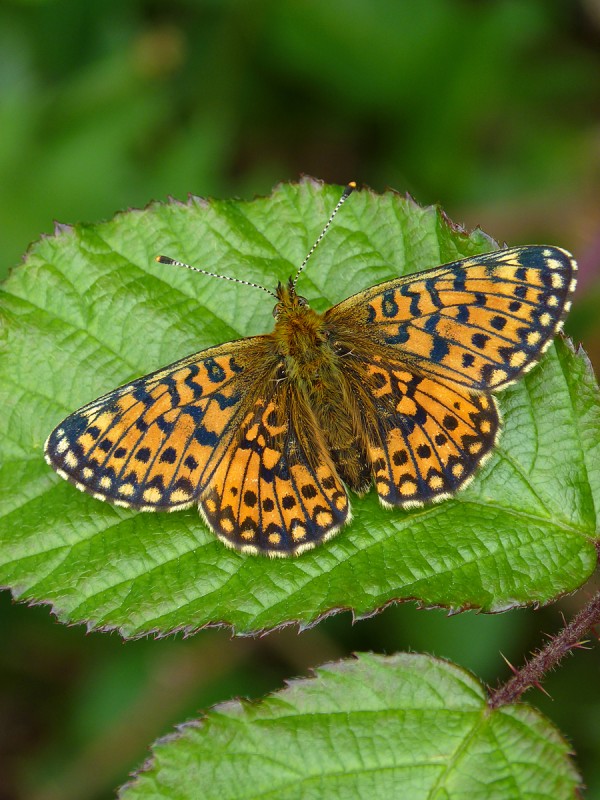
With open wings the two species have a very different shape (that’s my personal view). Otherwise, looking at the rear borders we need to scrutinise the row of black chevrons (triangles) next to the outermost rim of black studs. In Small Pearl-bordered they are “attached” whilst for Pearl-bordered the chevrons are poorly connected to the outer rims and appear “to float”.
Between the years 2006-2024 an “average first sighting” was May 25th (range, May 16th to June 3rd) and the “average last sighting was June 22nd (range, May 29th to July 1st). It would seem from the data that Small Pearl-bordered Fritillaries have a very short flight period. However, in 2024, Neil Hulme thought it likely that the first-emergence occurred around May 20th, and on June 22nd he could still find seven individuals, “including five females laying eggs far and wide”. Maybe the flight period is closer to five weeks.
Dates can help us when trying to identify similar species. In Rowland Wood, in late May, it is difficult finding a single Pearl-bordered Fritillary (as their season is largely over) and should one be found it is likely to be very worn, whilst the newly-emerged Small Pearl-bordered Fritillaries are very fresh.
Small, isolated populations are very vulnerable to adverse weather events, as happened in 2012/2013. Moving forward to the present day, Small Pearl-bordered Fritillaries had a good season in 2024. We can only hope that this population grows and disperses to other parts of the Vert Wood complex, and even beyond.
The only location in Sussex is Rowland Wood and Park Corner Heath. There is a small car park at TQ515147.
Female with open wings – photo by Neil Hulme
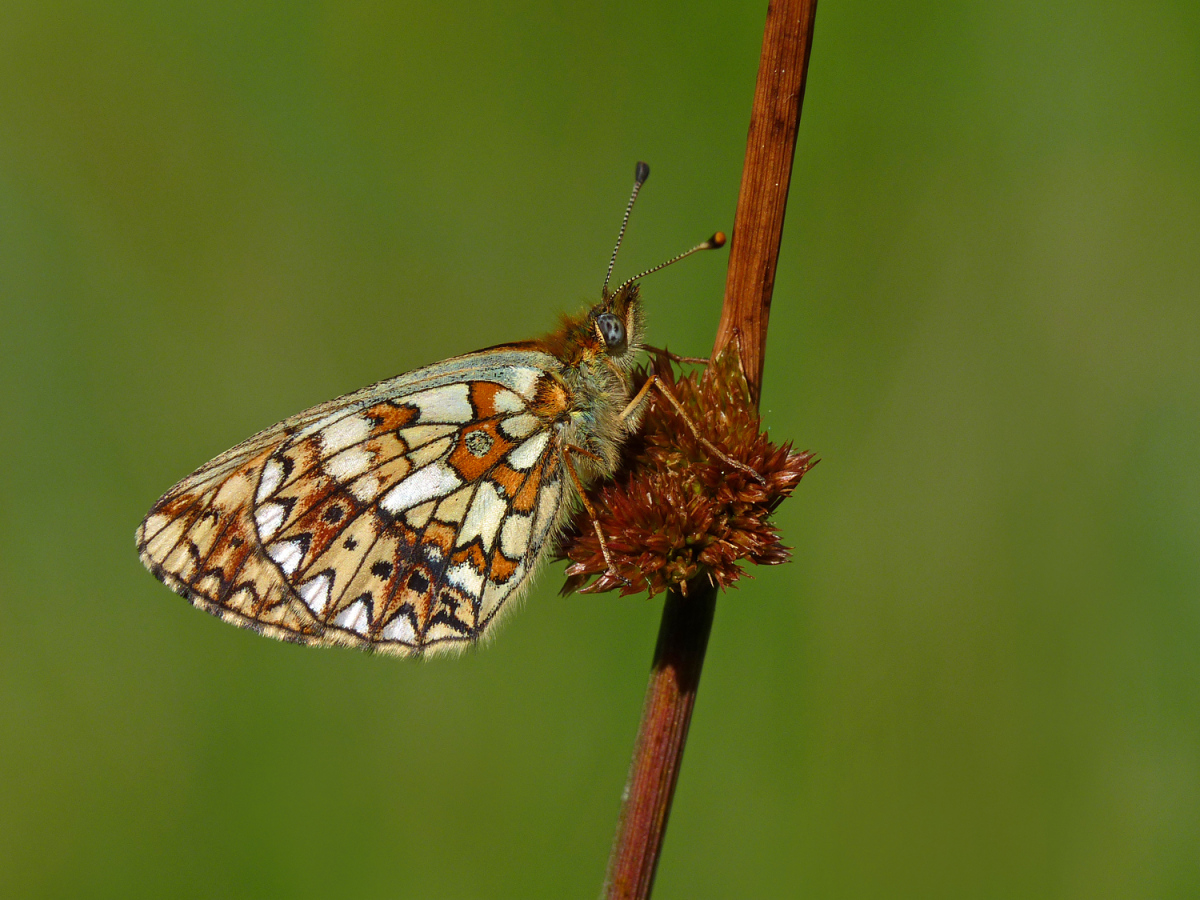
Female at roost – photo by Neil Hulme

Male with open wings – photo by Neil Hulme
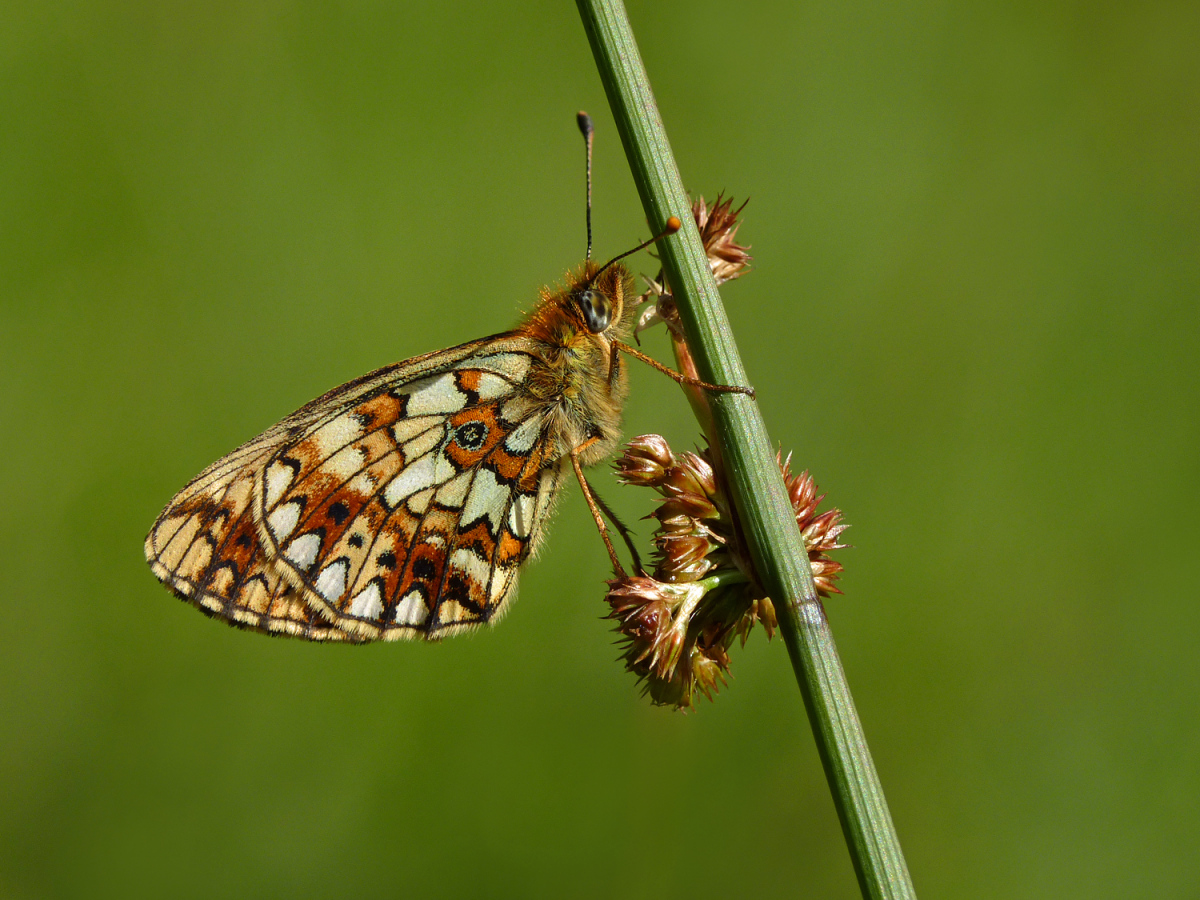
Male at roost – photo by Neil Hulme
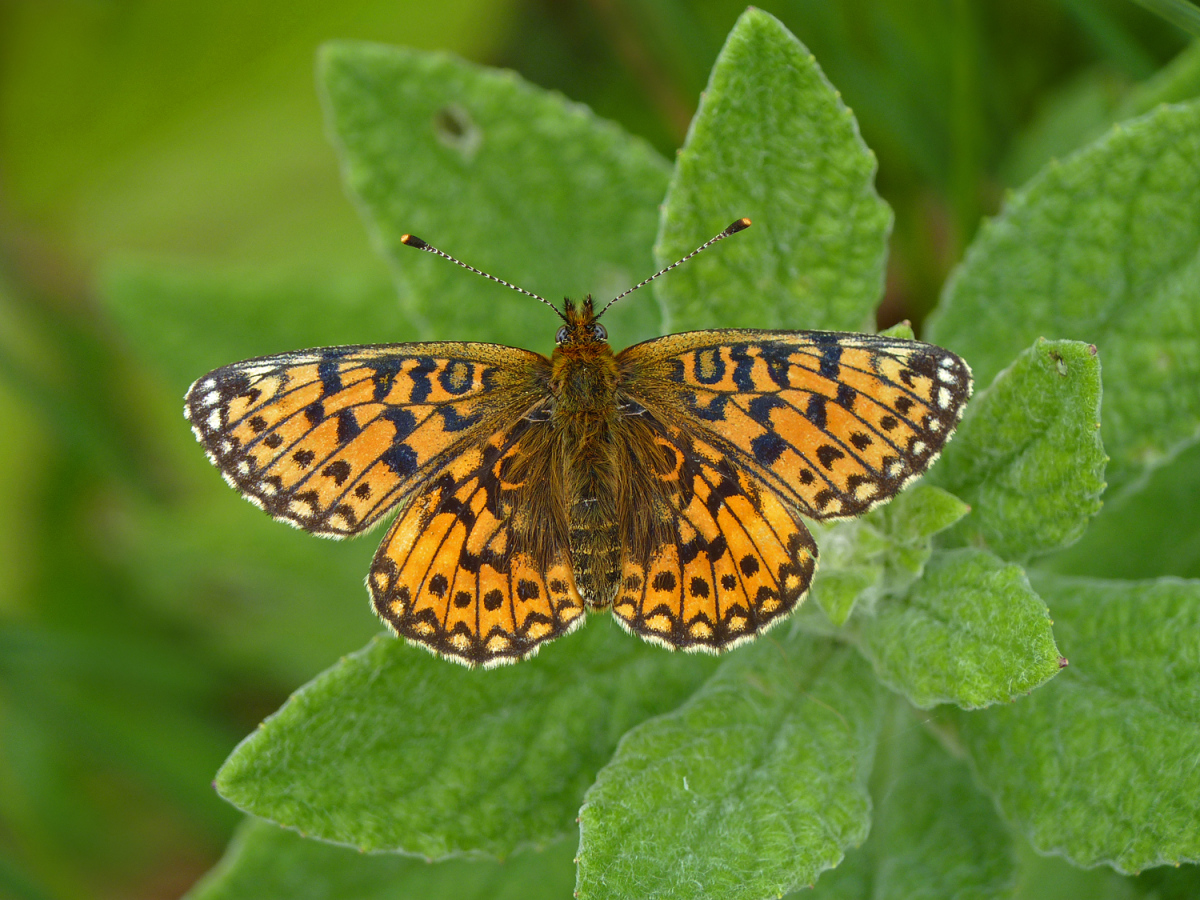
Female with open wings – photo by Neil Hulme
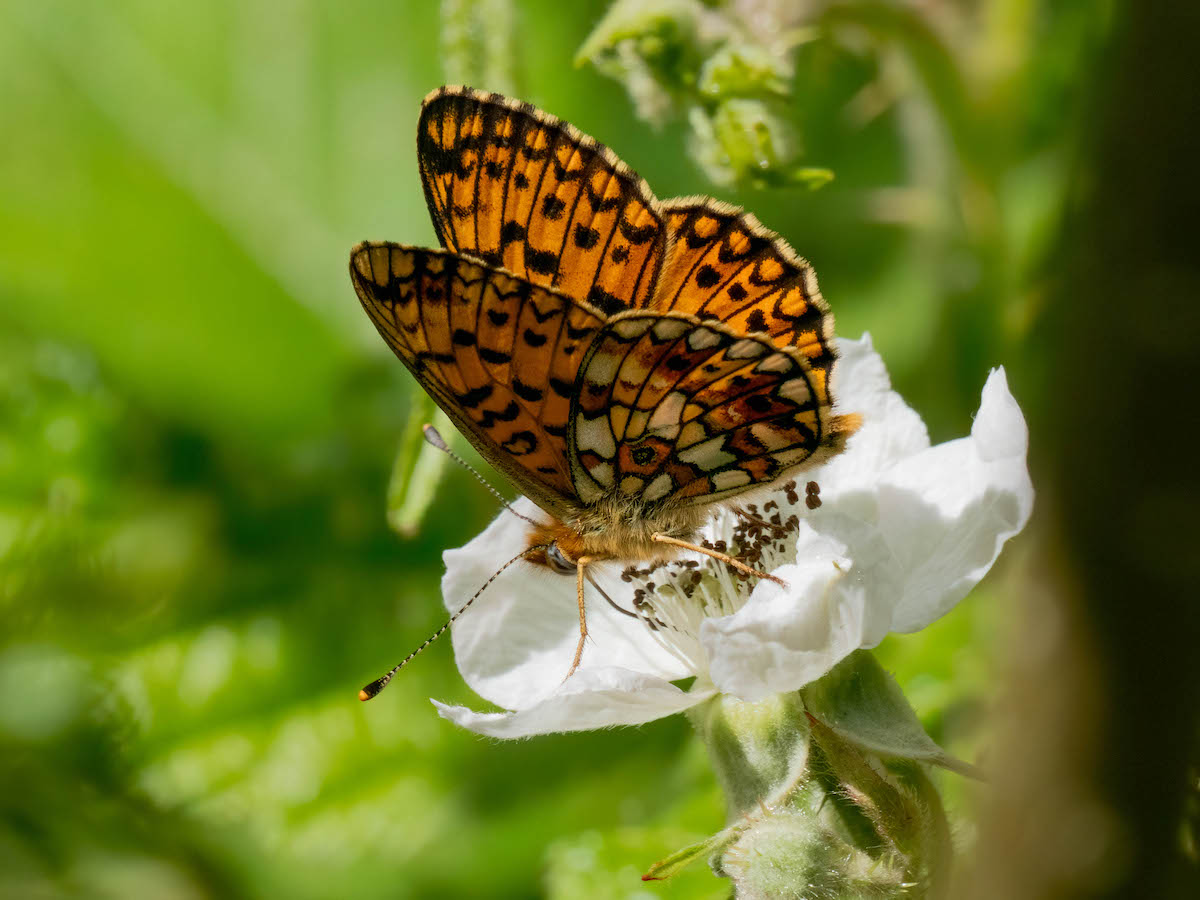
Nectaring on Blackberry blossom – photo by Graham Hubbard
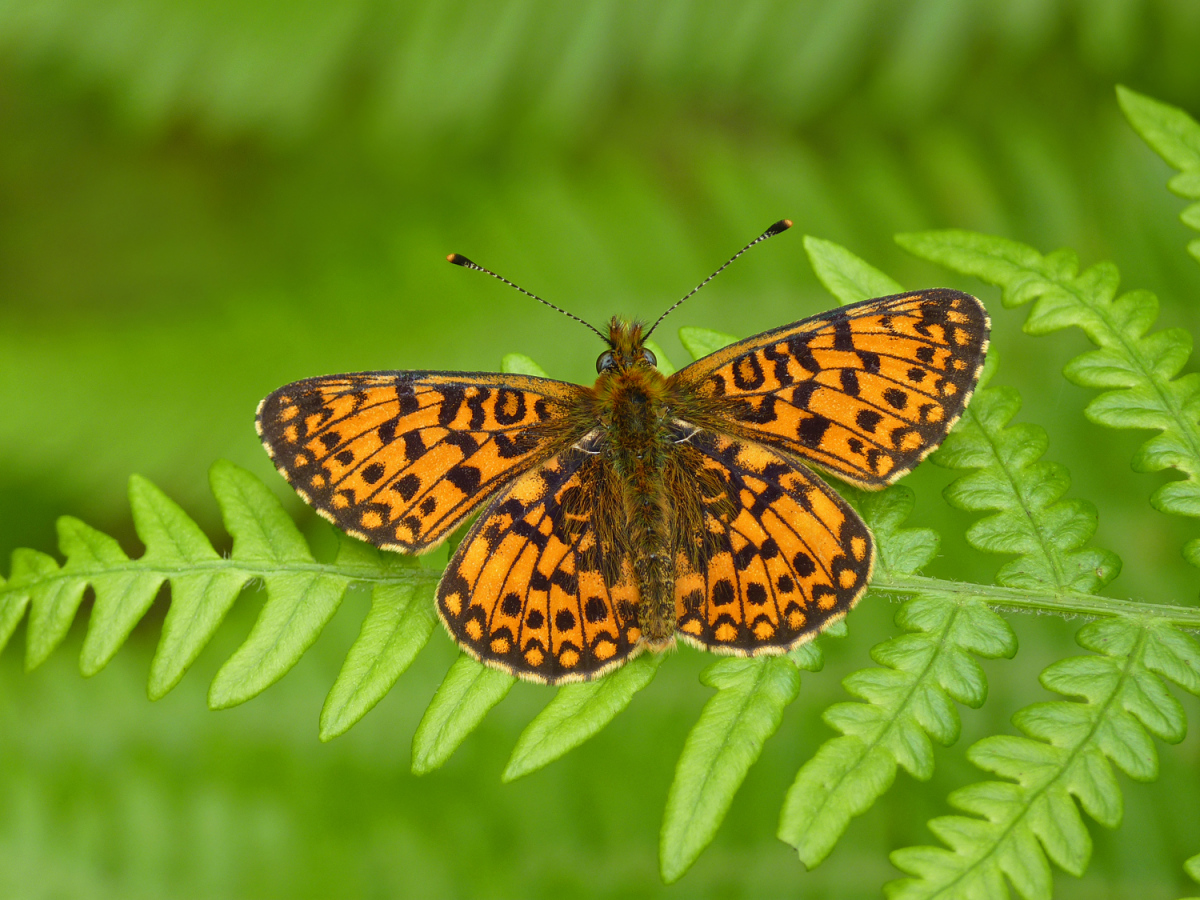
Black chevrons attached the black studs. A male - photo by NH
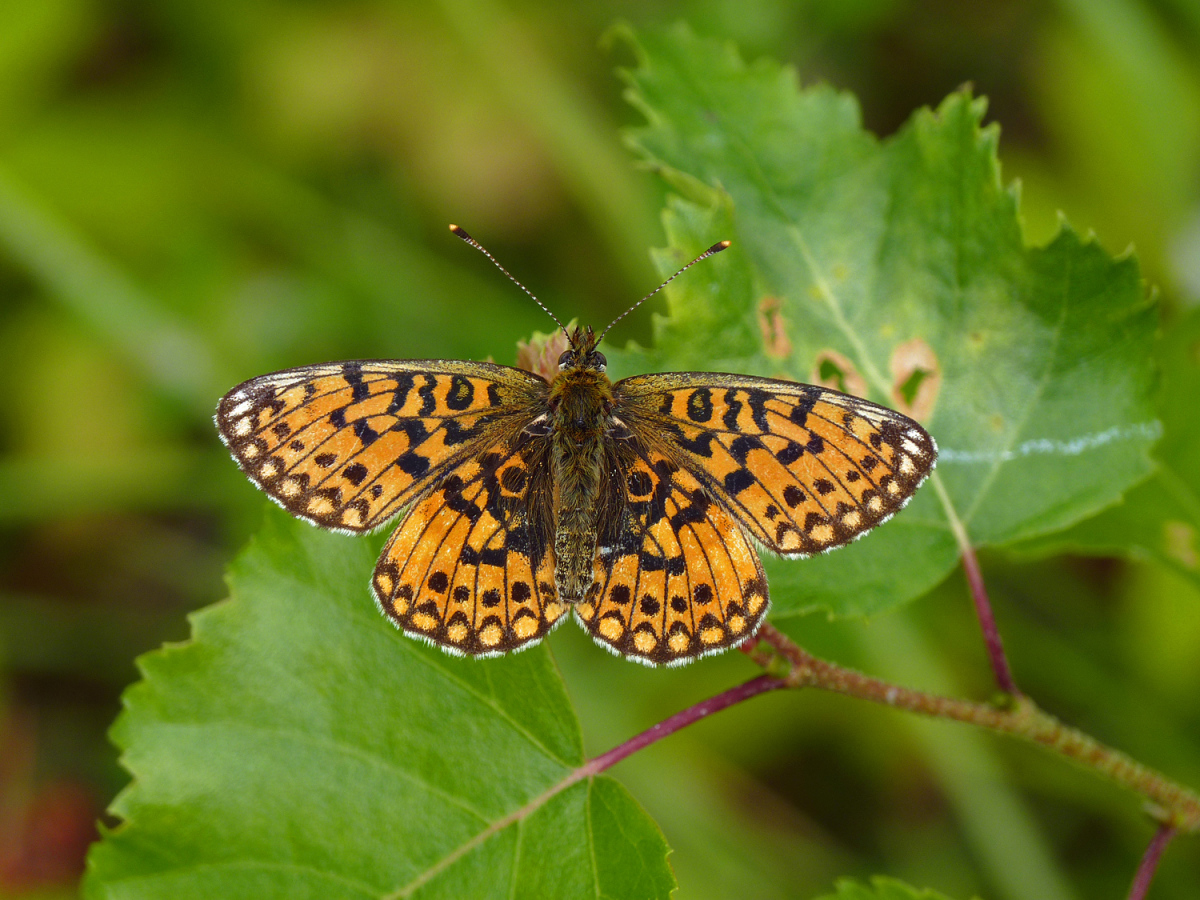
A 2024 Rowland Wood female - photo by Neil Hulme
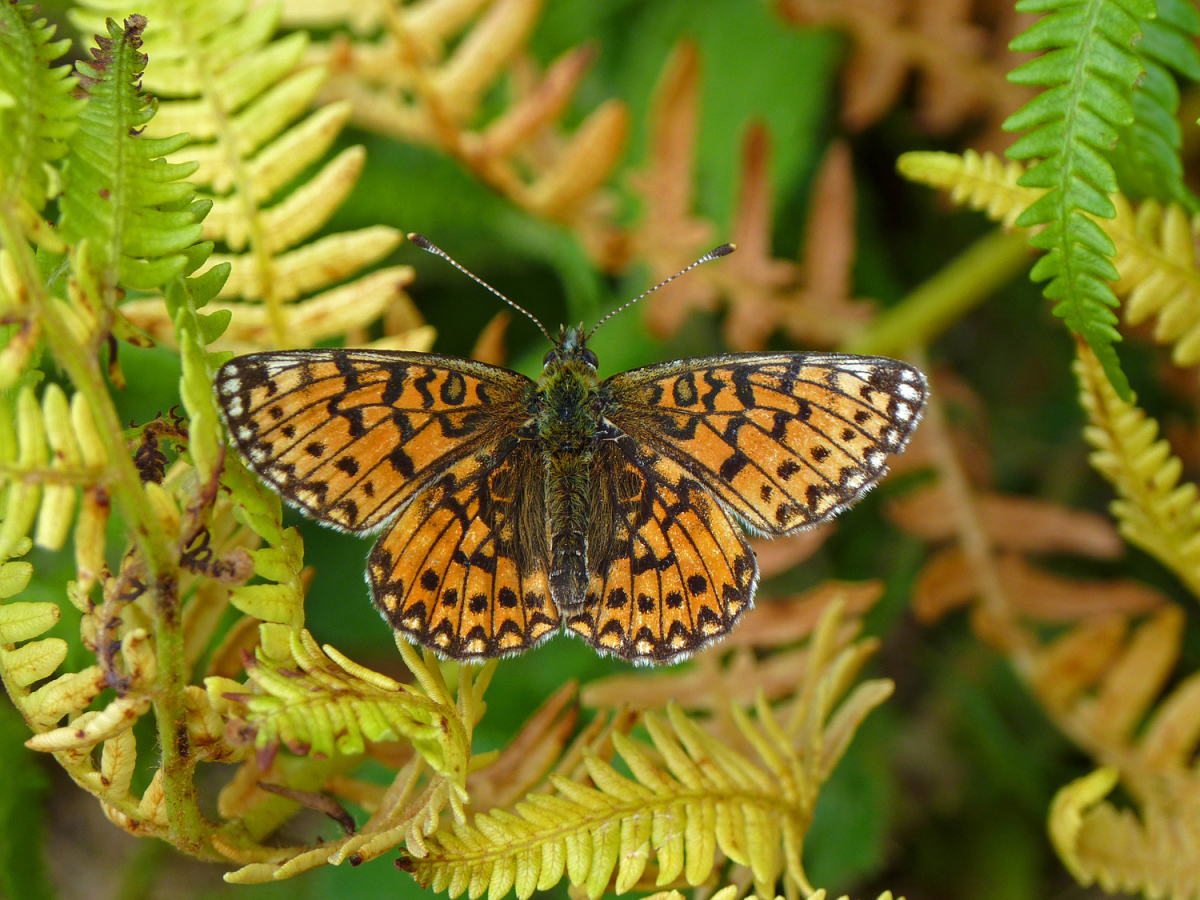
A different 2024 Rowland Wood female - Photo by Neil Hulme
Butterfly Conservation Small Pearl-bordered Fritillary