.JPG)
Pieris rapae
This is a fairly-common species which is widely distributed throughout the county. It lives in a loose, open population, with the adults wandering the countryside in search of nectar and suitable egg-sites. This butterfly is also a cross-Channel migrant, with the largest flocks recorded in late summer/early autumn and located in coastal areas such as Thorney Island, with 800 seen on 01/08/2012, and 1000+ on 13/08/2019.
In flight it may be confused with two other white butterflies, namely Large White and Green-veined White. When perched, the absence of green veins on the undersides soon rules out a Green-veined White and then it is a question of separating Small White and Large White. Since some Small Whites are “large” and some Large Whites are “small”, the size of the butterfly isn’t always a satisfactory guide to identification. The best way to separate these two white butterflies is to check the tip of the forewing. A Small White has a small amount of grey (sometimes black) which is confined to the tip of the forewing, whilst a Large White has a much more generous black patch on the tip of the forewing, and this extends down both the front and rear edges.
In Sussex, this species is triple-brooded. For the years 2006-2024 an “average first sighting” was March 13th but most of us will probably not see one until April, and the peak for the first brood is mid-May. The flight period of the more numerous second brood is usually mid-June to mid-September, and the variable third brood runs from mid-September to the end of October. The “average last sighting” for 2006-2024 was October 31st (range, October 8th to December 29th).
Small Whites lay their eggs on many different plants, including cabbage, cauliflower, nasturtium, swedes, Garlic Mustard, Sea Kale, Aubretia and Dames Violet, to name but a few.
The largest numbers are likely to be found where Brassicas are grown, which includes allotments and vegetable gardens. Most of the records that number in the many 100s are from coastal areas such as Peacehaven, Newhaven, Seaford, or on downland just a few kilometres inland. As already mentioned, the largest flocks have been reported at Thorney Island by C.B. & M. Collins.
Male Small White nectaring on Devilsbit Scabious – photo by Martin Kalaher
.JPG)
Female nectaring on Devilsbit Scabious
.JPG)
Nectaring on Verbena Bonariensis
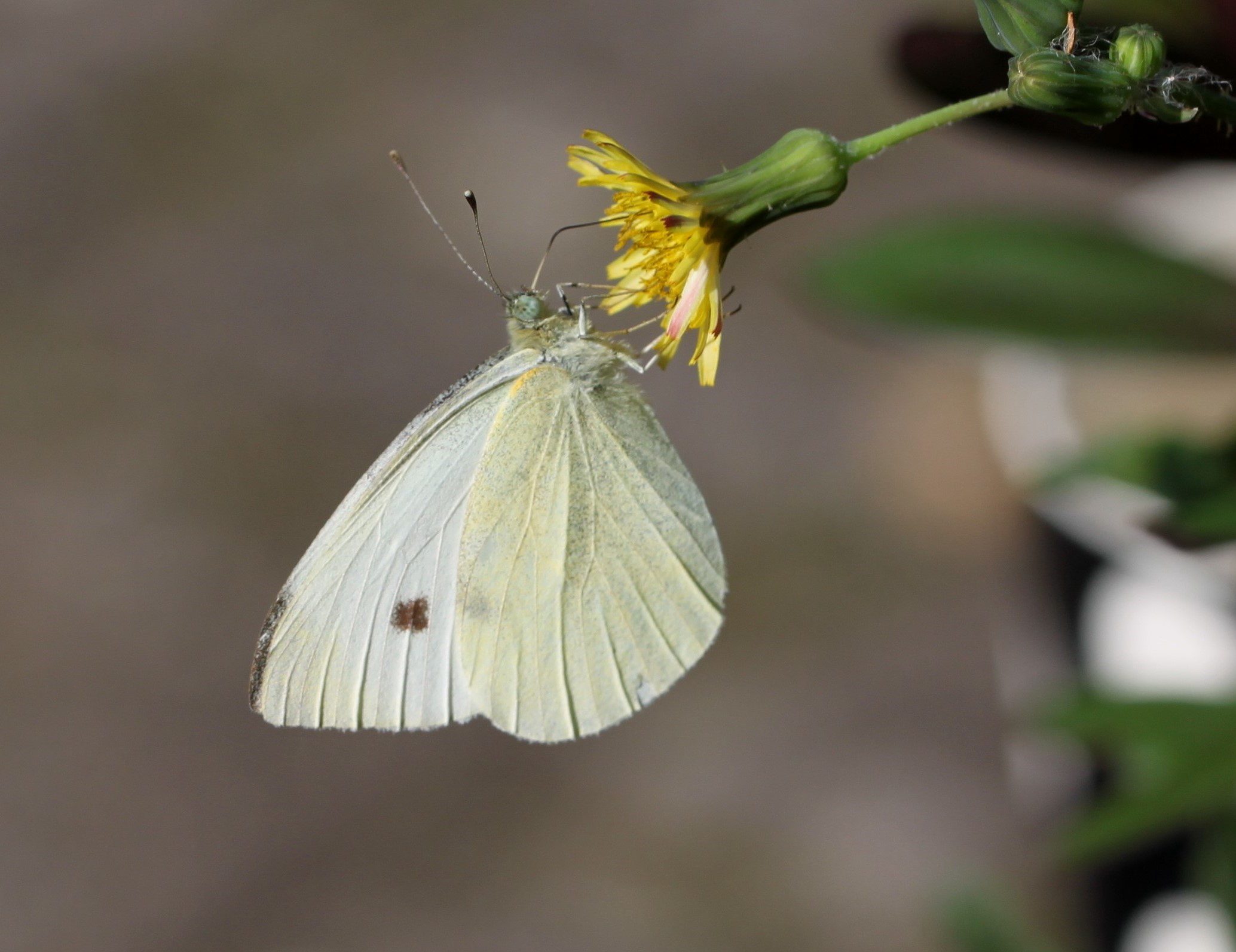
Nectaring on Nipplewort
.JPG)
Male nectaring on Devilsbit Scabious
.JPG)
A mating pair
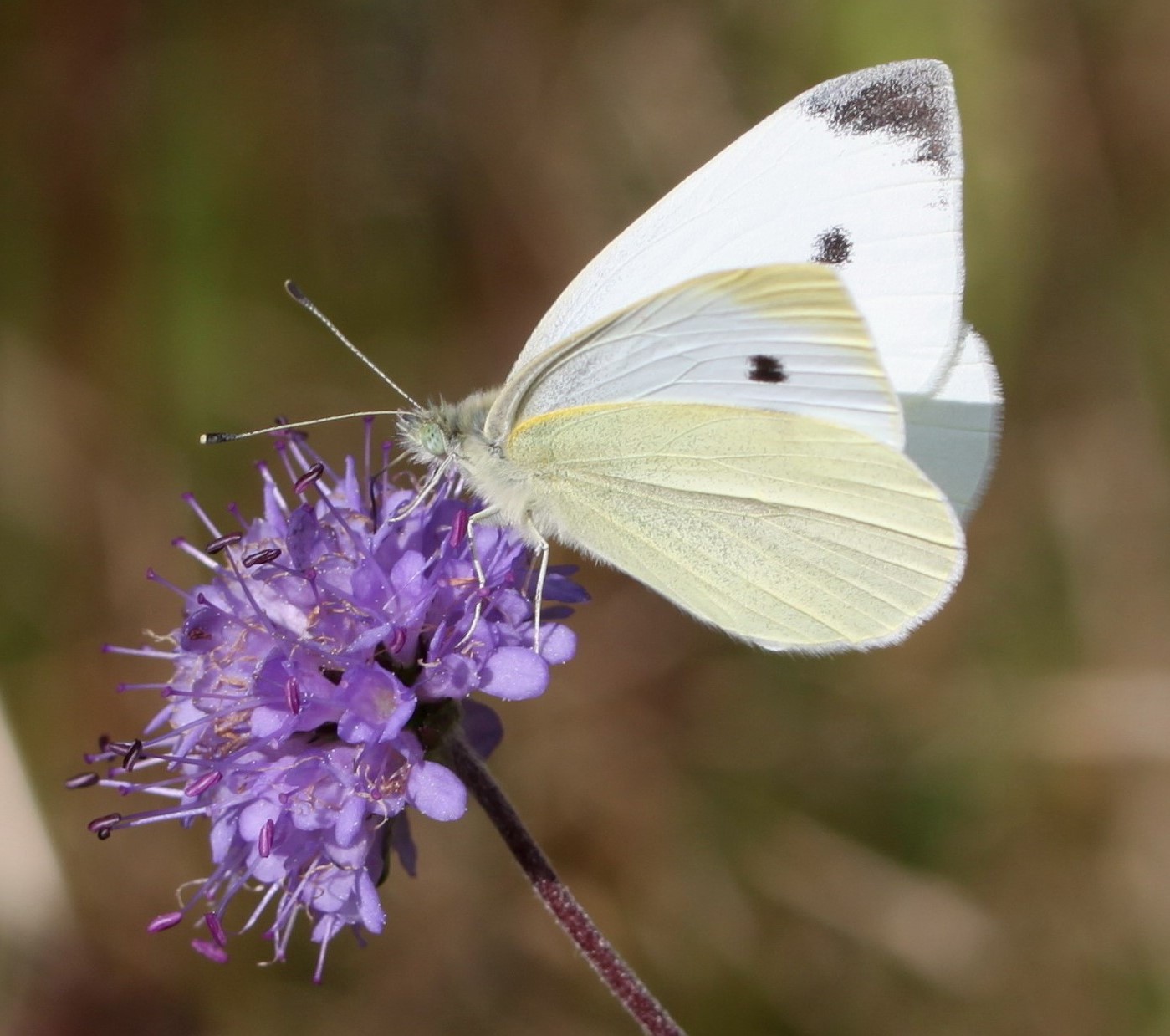
Nectaring on Devilsbit Scabious
.JPG)
Nectaring on Devilsbit Scabious
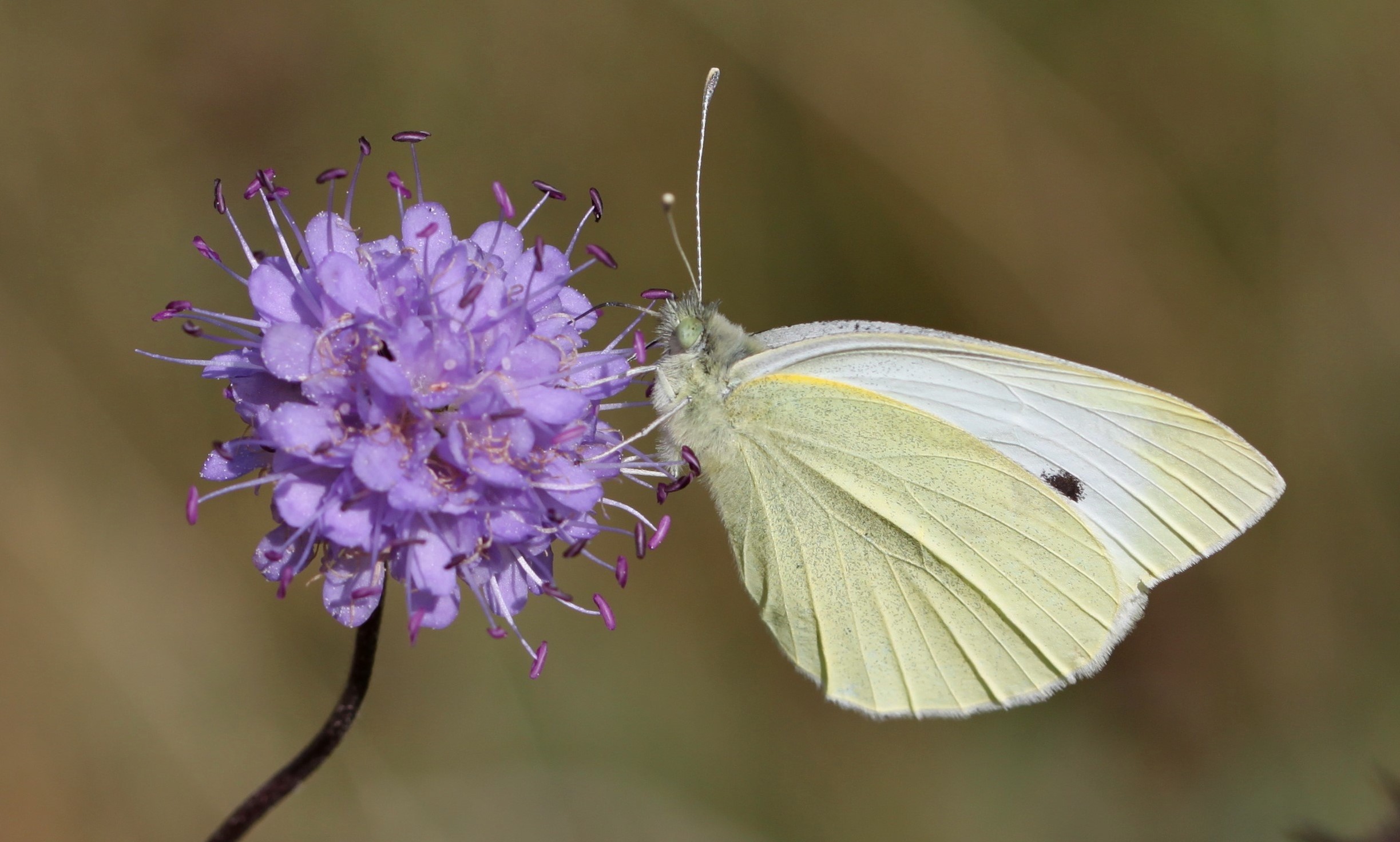
Nectaring on Devilsbit Scabious
Butterfly Conservation Small White