Lasiommata megera
This species has been in serious national decline for the past few decades, but in Sussex it remains a fairly common butterfly. Between the county surveys of 1990-1994 and 2010-2014 it was apparent that this species had suffered a considerable contraction of its range and was now confined to its stronghold on the South Downs, between Eastbourne and Storrington.
Over the past 3-4 years there have been some tiny indicators that its future might be a little bit brighter. The population at High and Over nr Seaford (monitored by Bob Eade) is clearly healthy and doing very well. Whilst it’s only an isolated record, the post received for the Sompting area, on 06/08/2024, was very gratifying: “there was an amazing count of 63 Wall Browns (on just 1.4 miles of footpath) between Sompting and Coombes Farm”. The reports for the geographical area encompassing Polegate/Hailsham/Berwick area were also very pleasing, as it appears that Wall Brown may be re-claiming breeding territory that was previously lost. It’s not much to go on, but it does provide us with some grounds for optimism.
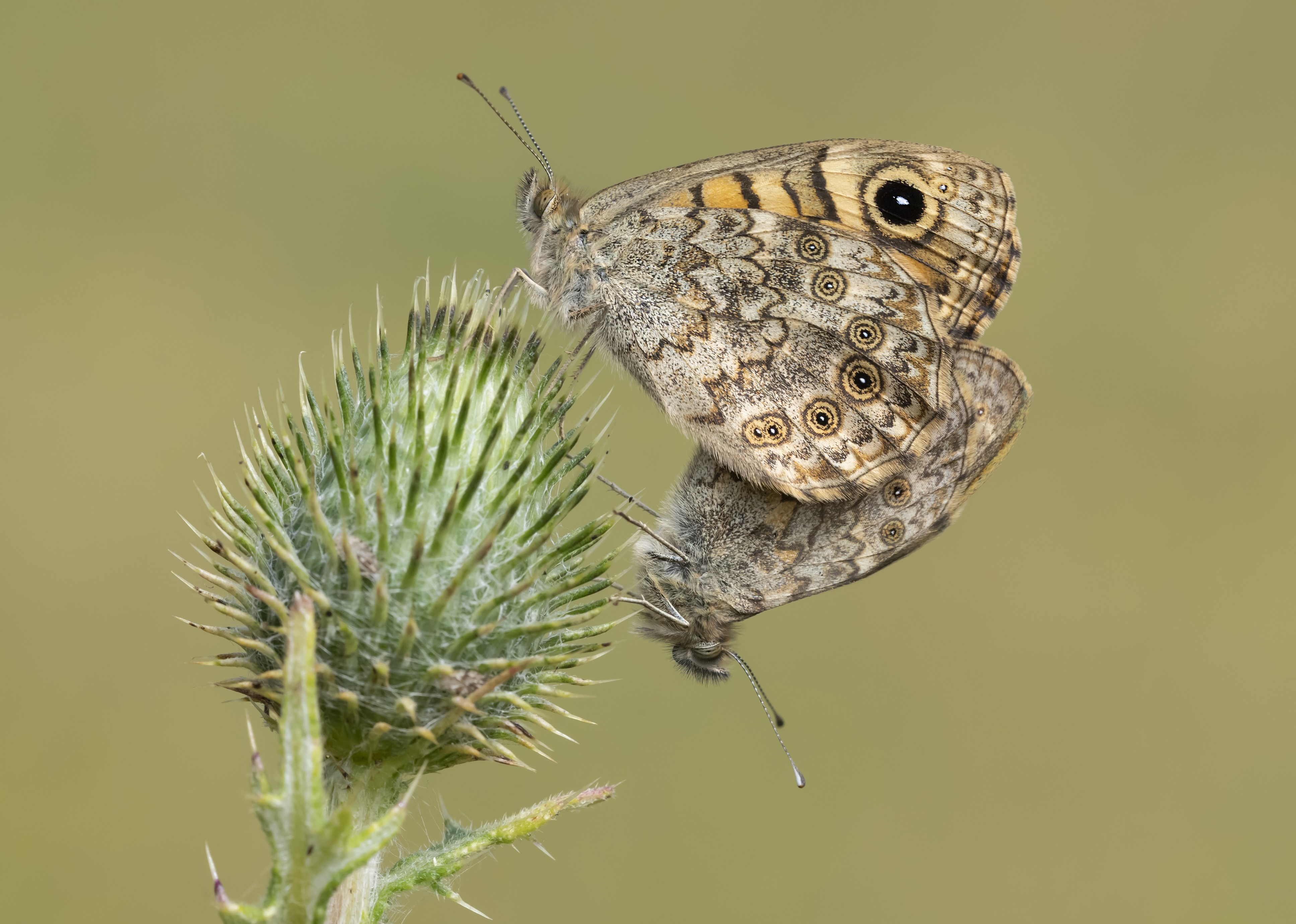
There are not many orange-brown butterfly species that sun-bathe on the tracks of Sussex downland and so identification should be fairly straightforward. The uppersides are orange-brown, with dark brown stripes and bars, and the males have a very distinctive, sex brand on the forewings. The females are significantly larger, and the background colour a paler orange, and even in flight we should be able to differentiate between the sexes. With closed wings, the most distinctive feature is a row of large rings at the rear edge of the hindwing. Given its usual downland location, we are not likely to confuse it with any other species, except the rare Queen of Spain Fritillary!
Between 2006-2024 an “average first sighting” was April 22nd (range, March 29th to May 22nd). The second brood, which is much larger, begins in mid-July and usually lasts until early September, and finally, there is a regular third brood from mid-September, onwards. This third brood was previously partial and very irregular but for the past decade, or so, it has been annual. The following is a quote from Bob Eade: “Since I started monitoring the species, at least one 3rd brood was seen every year, but with 2016 there were a few records of 5 or more flying together (in the same area), but 2017 all 3 broods did very well”.
As a result of climate change, many butterfly species appear earlier and depart later, and in this millennium, many have an added brood, whether this be a second brood or a third brood. The occasional, partial, third brood for Wall Brown has quite clearly made a significant leap (from around 2016) and third brood numbers are now substantial at High and Over and Mill Hill. This adaptation to a changing world is working well for Wall Brown.
The eggs are laid in the middle of clumps of grass and on the South Downs it would seem that Cocksfoot is the preferred choice. Other grass species known to be used are, Tor Grass, False Brome, Yorkshire-fog, Common Bent, Black Bent and Wavy Hair-grass.
Cissbury Ring between TQ137077 and TQ143081 (via TQ139082), Edburton Hill to Fulking Hill between TQ231112 and TQ250110, High and Over at TQ510009 and also between TQ511014 and TQ488023, Mill Hill between TQ211071 and TQ210075, Steyning Downland Scheme at TQ164113, TQ162109 and TQ168103.
A mating pair of Walls – photo by Bob Eade
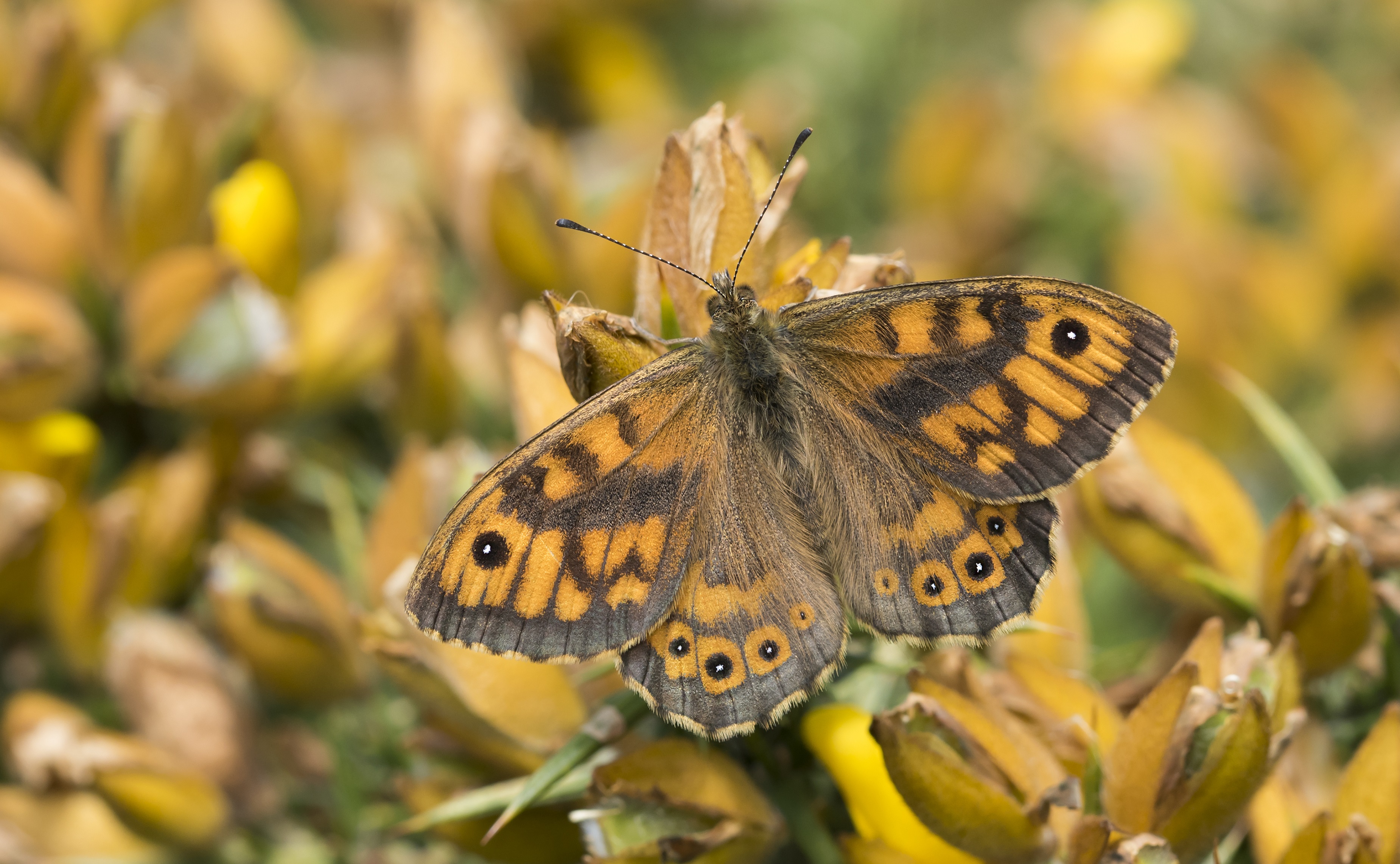
Male with open wings – photo by Bob Eade
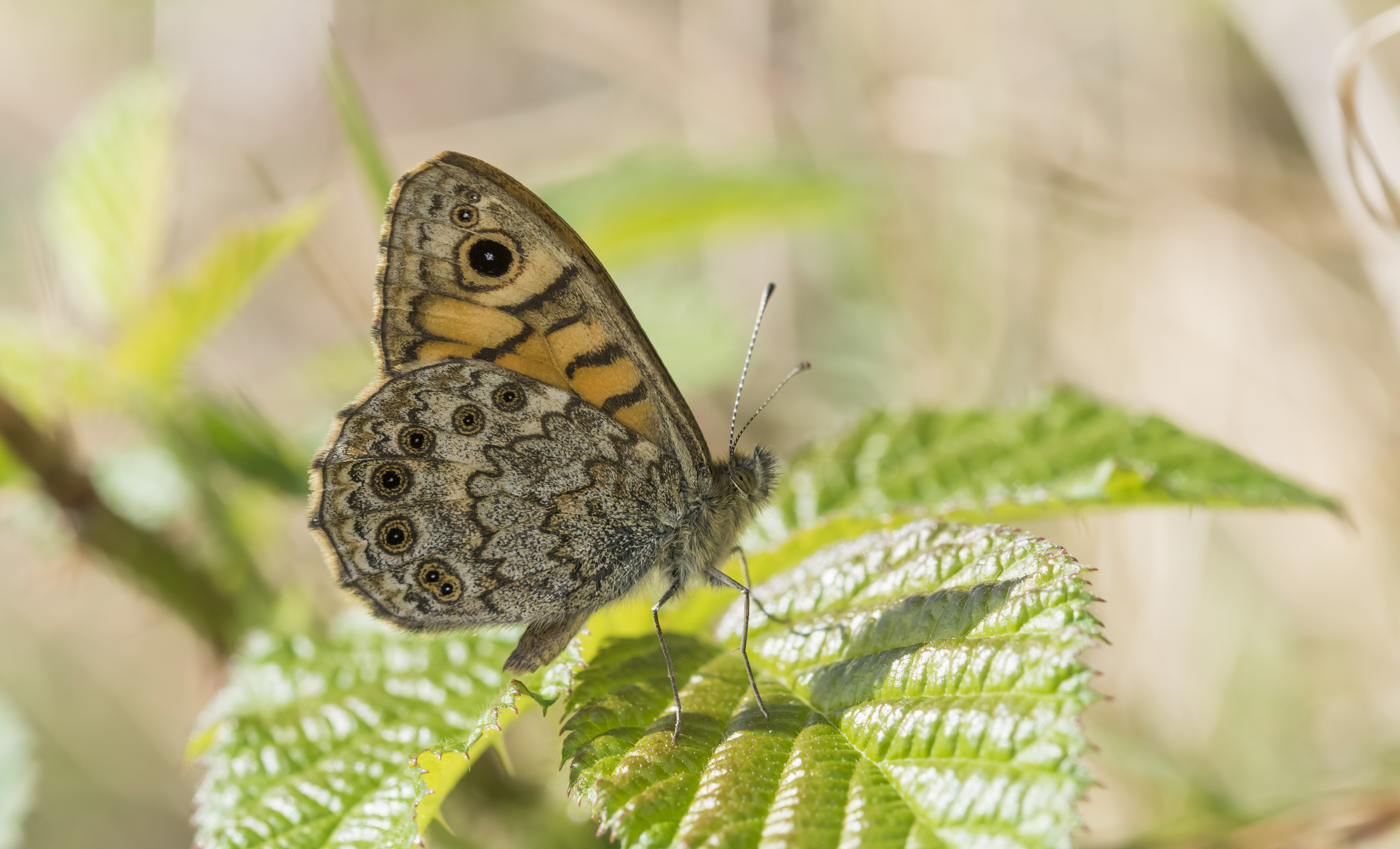
Male with closed wings – photo by Bob Eade
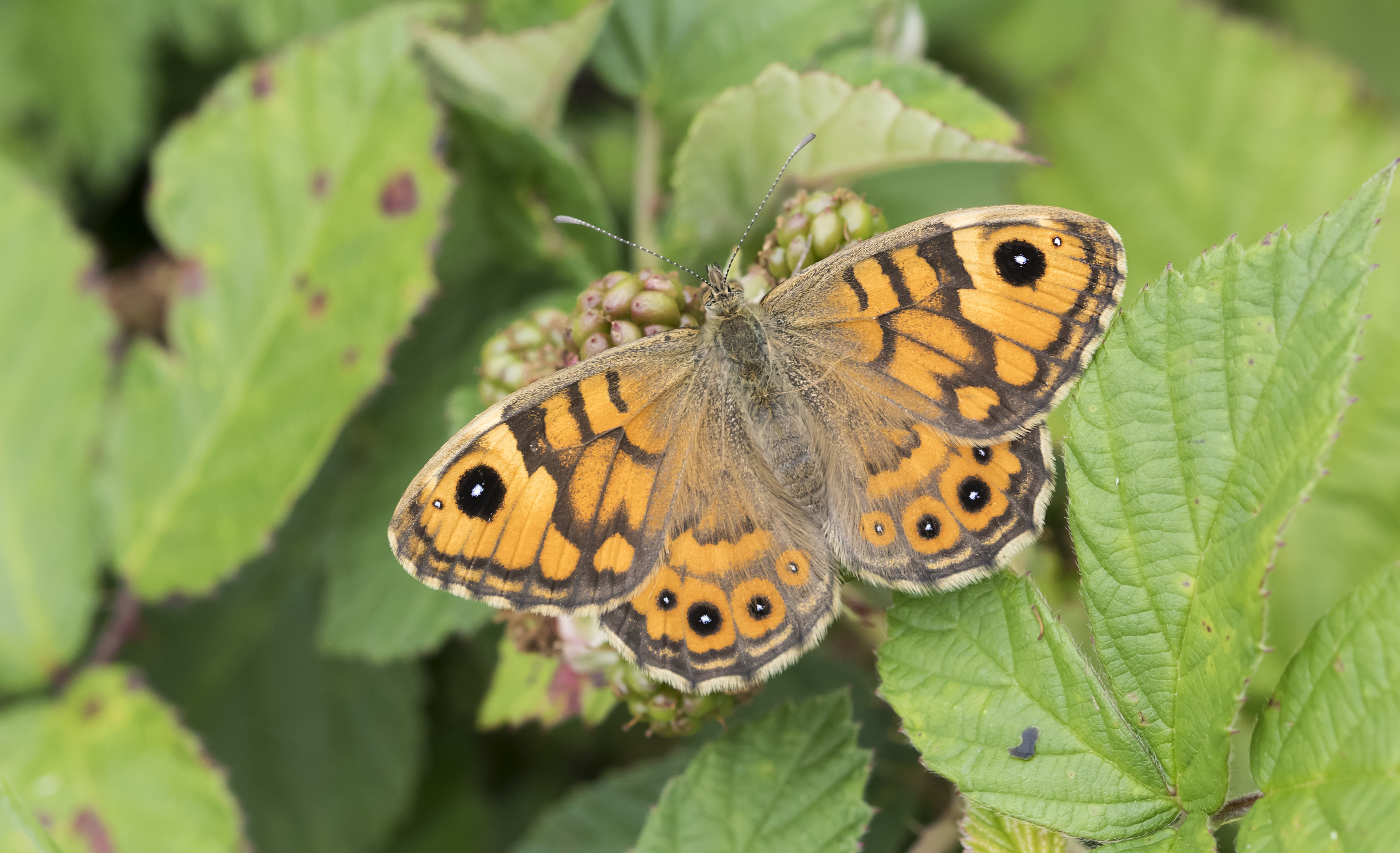
Female with open wings – photo by Bob Eade
.JPG)
Female with closed wings – photo by Bob Eade
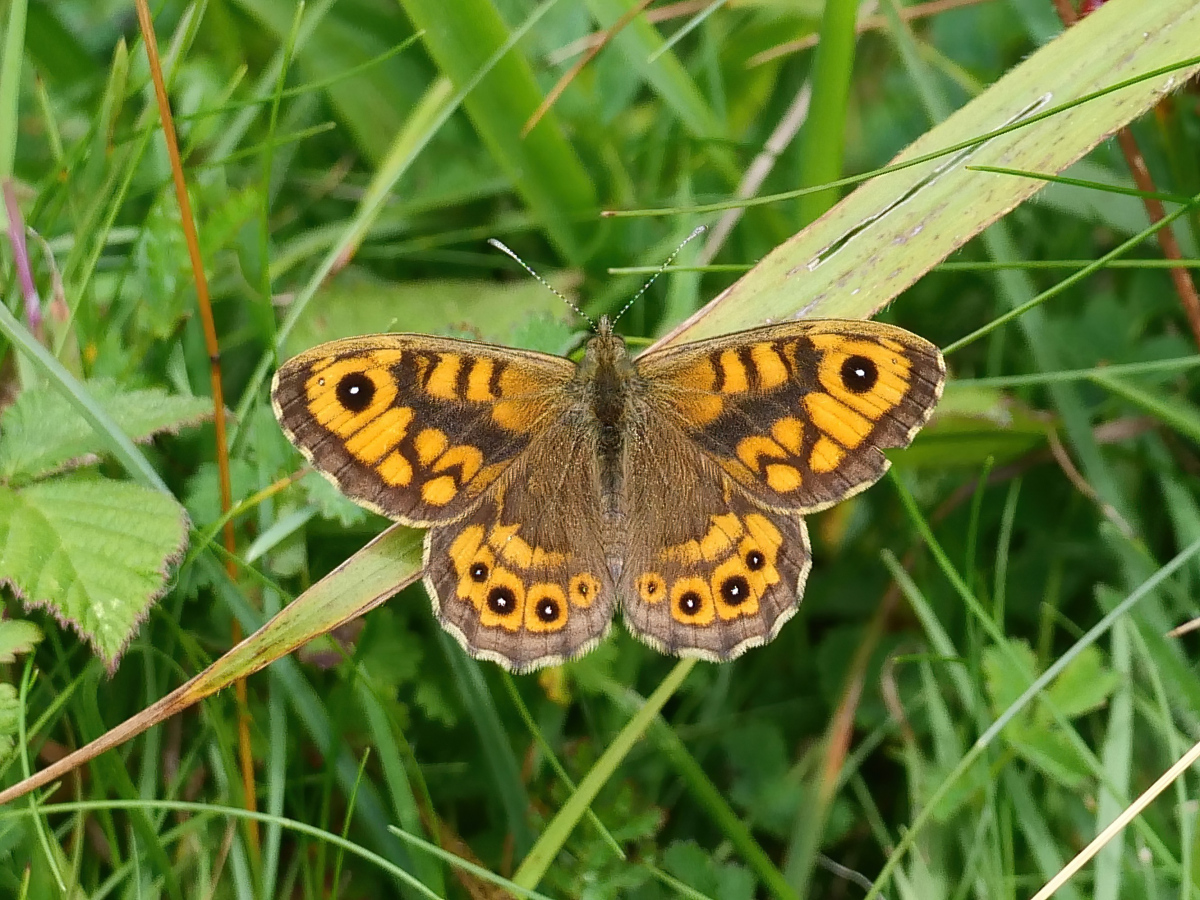
Male Wall Brown – photo by Nicholas Turner
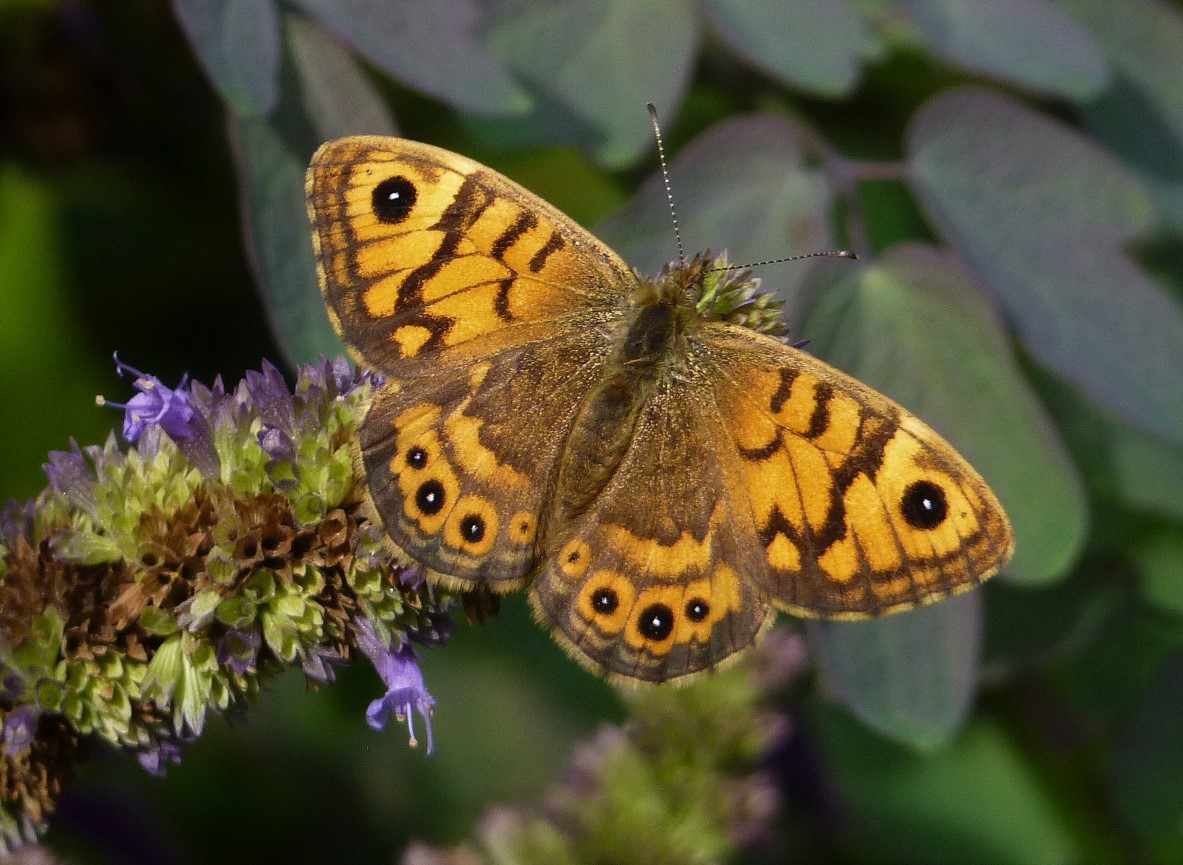
Female Wall - photo by Trevor Rapley
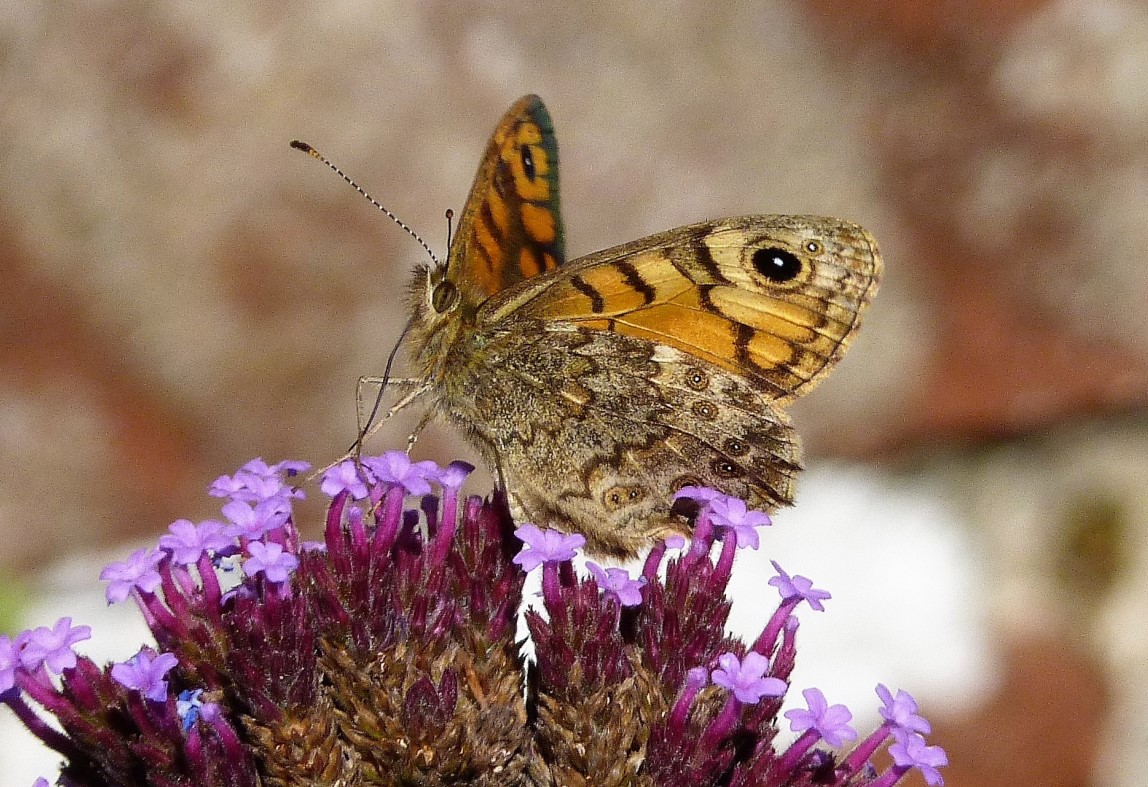
Feeding on Verbena bonariensis - photo by Trevor Rapley
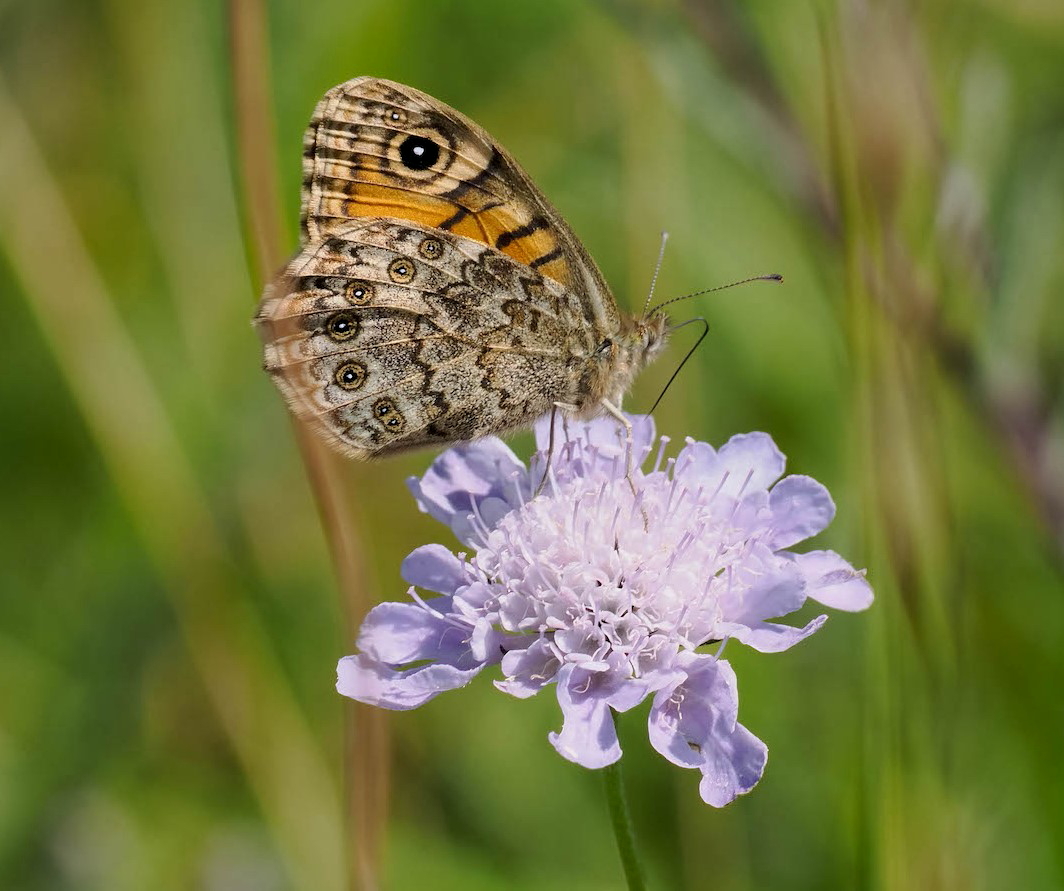
Feeding on Small Scabious - photo by Graham Hubbard
Butterfly Conservation Wall Brown