.JPG)
Polygonia c-album
Commas usually sleep a little deeper compared to other species that regularly over-winter as adults, and an “average first sighting” for the years 2006-2024 was not until February 26th, with peak activity recorded a few weeks later, in the first half of April. Sunshine, shelter, a decent supply of nectar and a patch of Common Nettles are the basic needs for this butterfly, and these requirements can often be satisfied in a sunny woodland ride. They can also be found in more open habitats such as a sun-bathed hedgerow, parks and gardens.
The summer brood begins in late June and compromises two different forms of adults and with two different breeding strategies. The usual darker form quickly goes into hibernation but the pale form, known as Hutchinsoni, begins the Comma’s second breeding cycle for the year. Hutchinsoni adults only live for a few weeks but their offspring duly emerge in early September and then hibernate in mid-November. The average last sighting date for the website records 2006-2024 was November 16th, with a range from October 15th to December 27th.
Historically, the larval foodplant of Comma was Hop, and if you would like to support this butterfly species you might consider growing some Hops in your garden. They are easy to grow and once established they require no maintenance.
They are widely distributed throughout the county. In the spring they should be fairly easy to find in any good-quality sunny, woodland ride but they may also be found in more open countryside, wherever their basic requirements are met. In mid-summer they can often be found nectaring on Blackberry blossom and in late summer drinking the juice of the Blackberries. In August and early September large numbers may appear in our gardens, as they seek the nectar of Buddleia, and in September/October, look for them on the flowers of Common Ivy.
Comma nectaring on Blackberry blossom – photo by Martin Kalaher
.JPG)
Closed wings, showing the white “comma”
.JPG)
Nectaring on Blackberry blossom
.JPG)
Nectaring on Verbena Bonariensis
.JPG)
Nectaring on Devilsbit Scabious
.JPG)
Nectaring on Buddleia
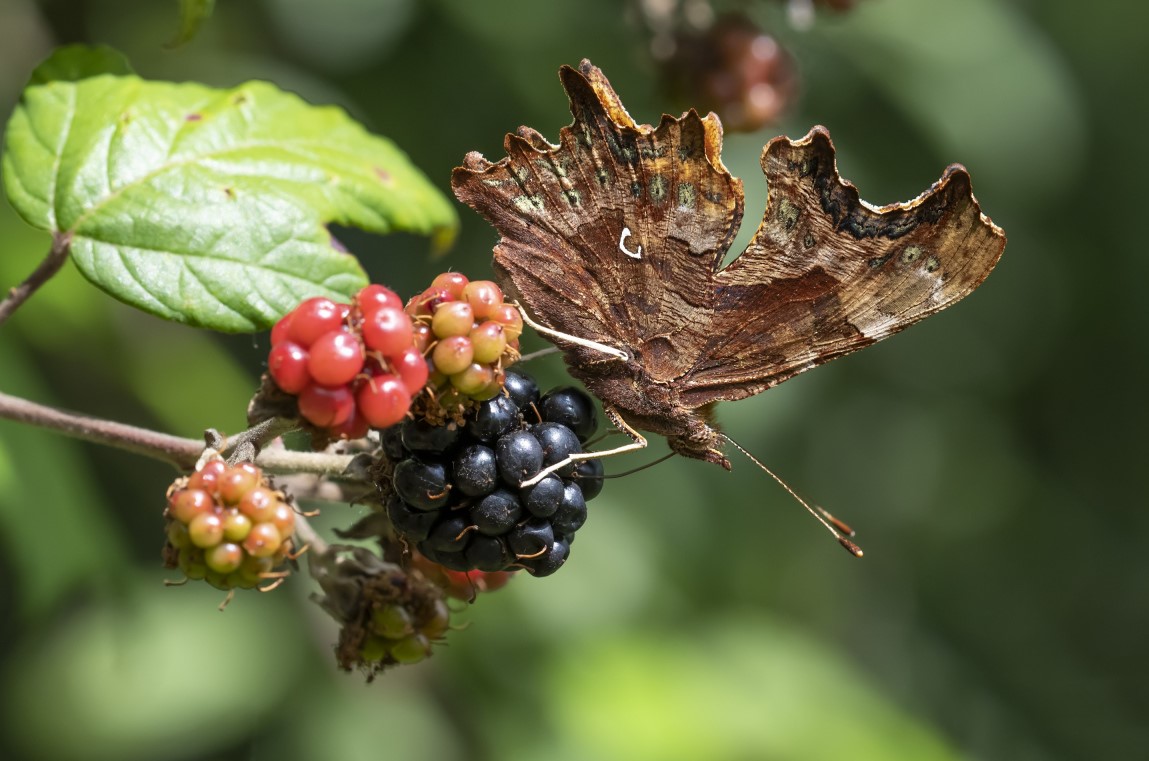
Feeding on the juice of a Blackberry - photo by Bob Eade
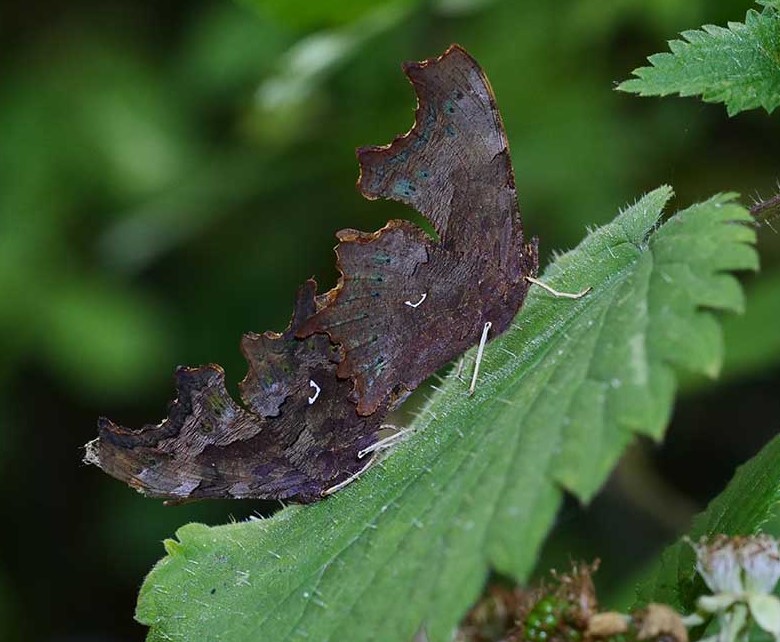
A mating pair - photo by David Cook
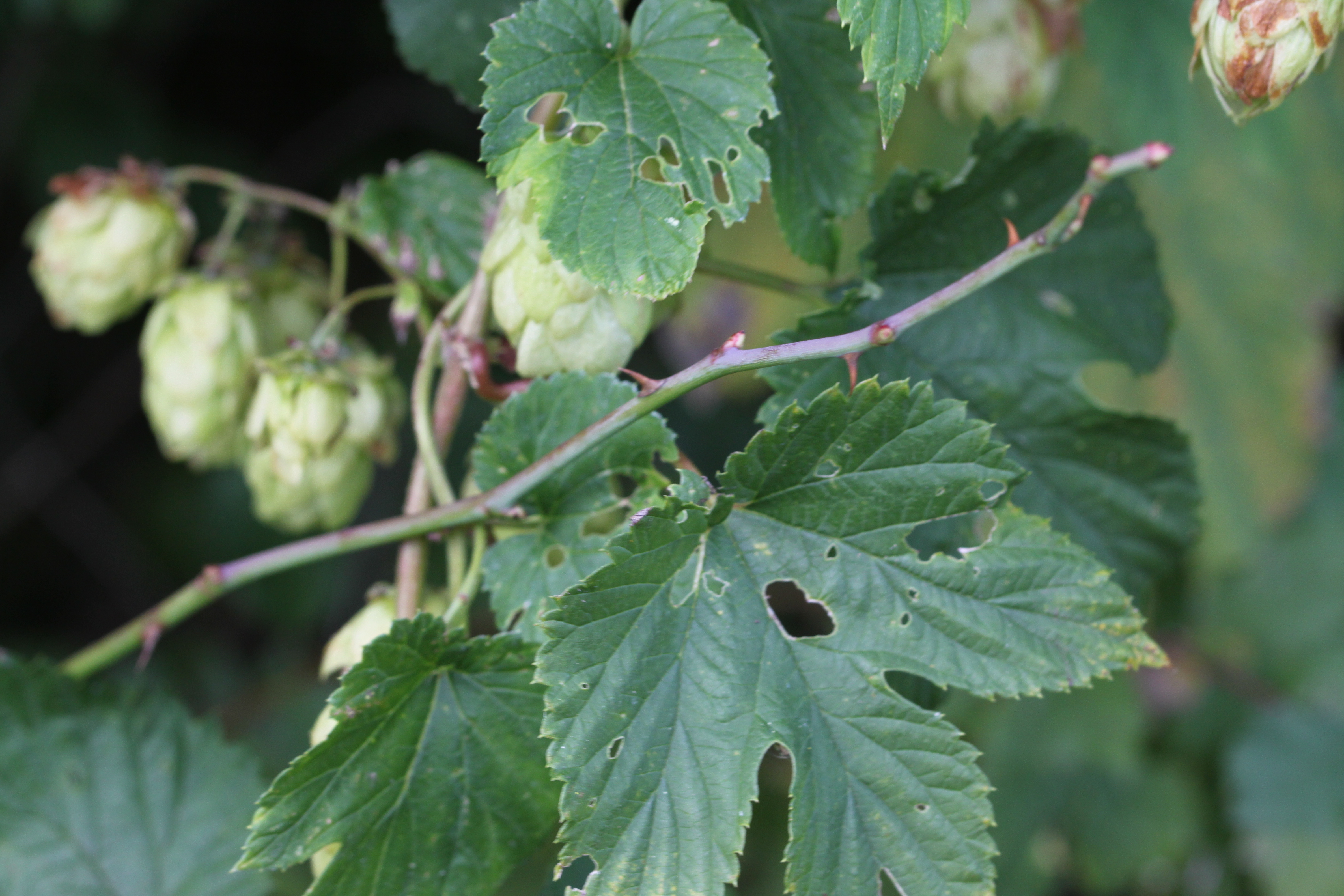
Comma larval feeding damage of Hop leaves
Butterfly Conservation Comma